2 0 1 6 - 2 0 2 2OYE! Collective
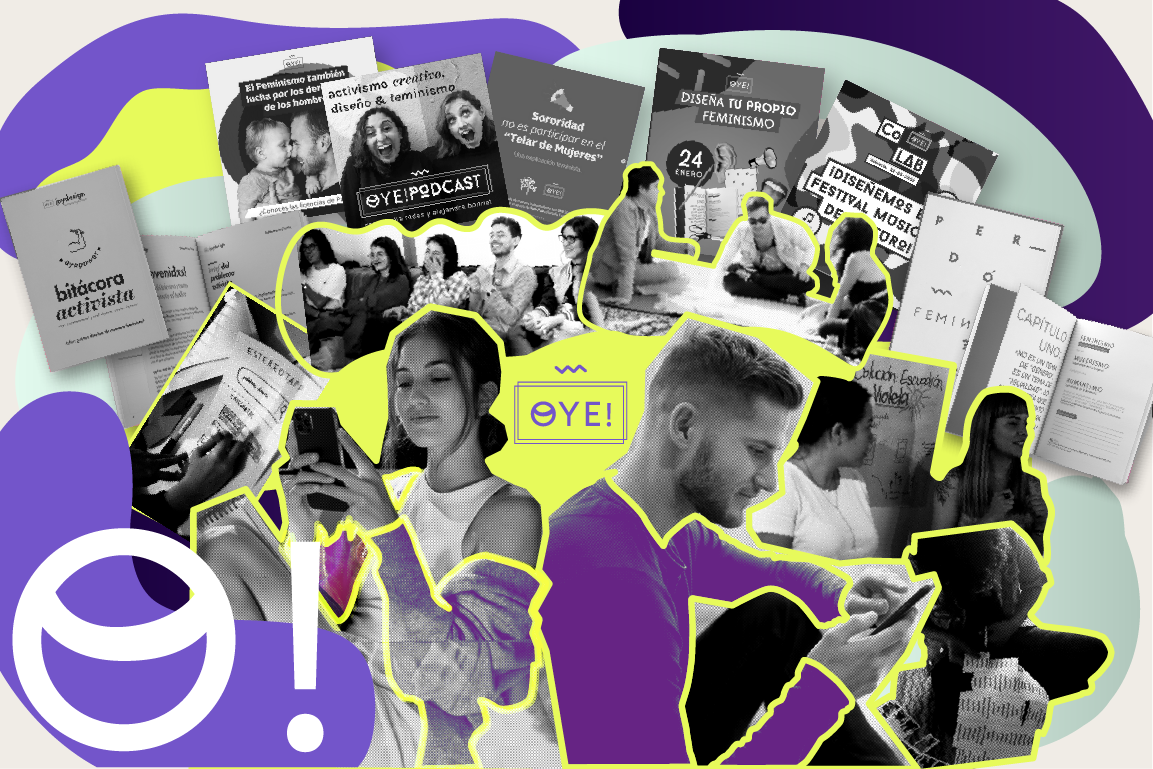
A participatory design community helping young adults apply feminist ideas into everyday life.
Project type
Content and community service (freemium model)
Team
Co-directors, community members , expert practitioners.
My Role
Founder and Co-director (service design and content creation)
Timeline
6 years (2016- 2022)
T H E P R O B L E MPeople wanted gender equality without the feminists.
Almost everyone around me said they supported gender equality. They wanted the outcome but rejected the body of knowledge built by the people working toward it: the theory, the activism, the language.
Why use feminist ideas in everyday life?
Gender inequality is a deep, ongoing problem. It shows up in everyday moments (a comment at work, a family dinner, a group chat), affects everyone, never fully ends, and even naming it is political. No single service can fix it. So OYE! didn’t try. It focused on one step: the gap between believing in equality and acting on it. Research found that gap wasn’t caused by ignorance but by fear of being judged. That made it solvable. You can’t end patriarchy, but you can make asking the first question easier. OYE! is a digital community that helps young adults practice feminism in daily life without fear of doing it wrong.
OUTCOMES85 survey responses, 4 expert interviews, 2 co-creation sessions. Most people were afraid.
The barrier was shame.
A service, not a campaign.
Workshops in three cities, a podcast, a newsletter, a private community. ~150 people learning out loud.
Our peer-reviewed chapter reached Mónica Roa, who hired Camila and me to help her build her NGO, Puentes.
Published, then recruited.
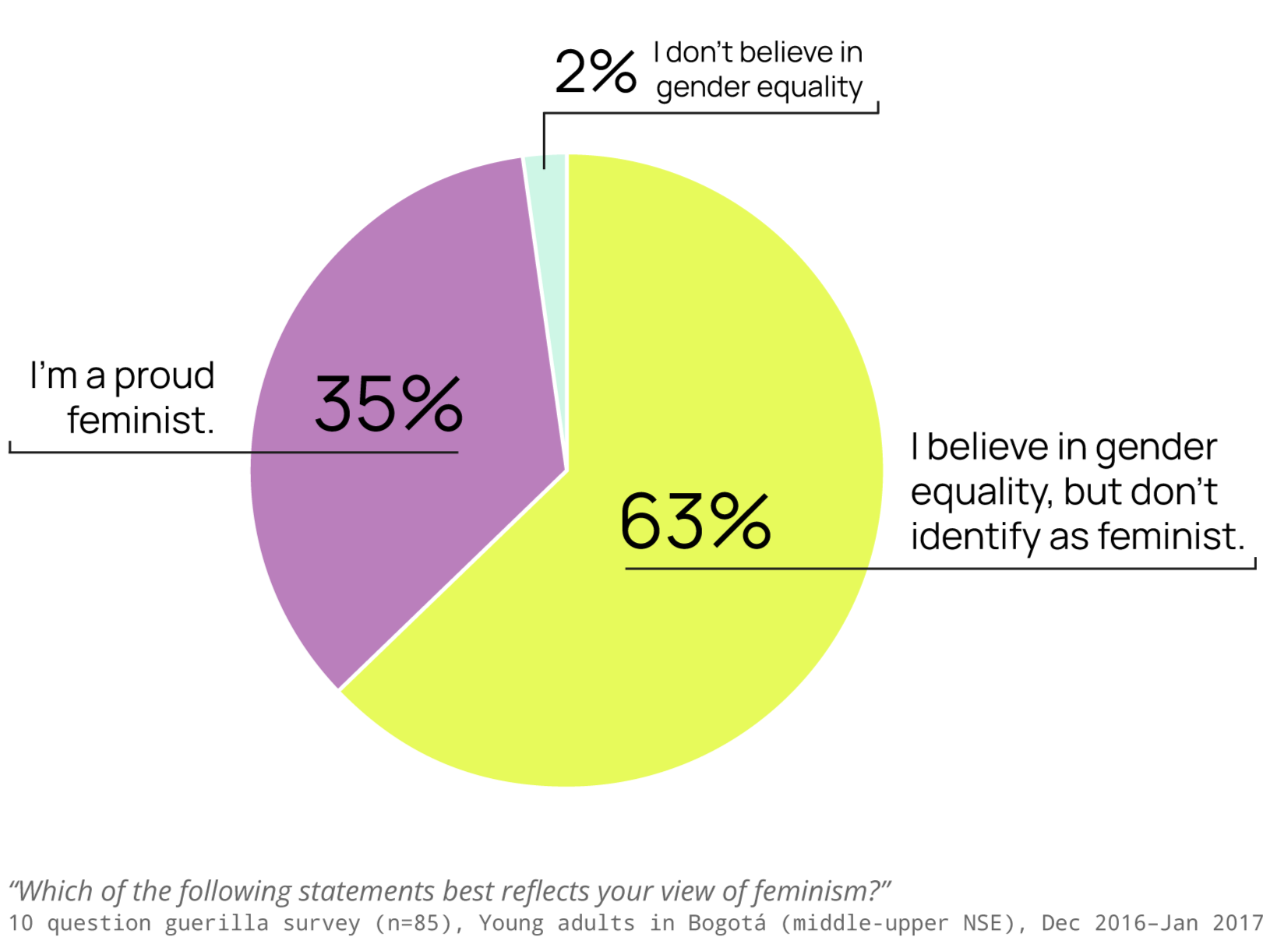
63% believed in gender equality, but not in feminism.
THE GAPSource: "FEMCUESTA" Guerrilla survey, n=85, Young adults in Bogotá (late 20s/early 30s, middle-upper NSE), Dec 2016–Jan 2017 | Convenience sample from my social network. Treated as directional signal.I ran a co-creation session to explore emotions that fuelled the gap.
2017: 4 participants (2 women, 2 men): artists, an architect, and a political scientist, late 20s, Bogotá. All believed in gender equality; none identified as feminist.
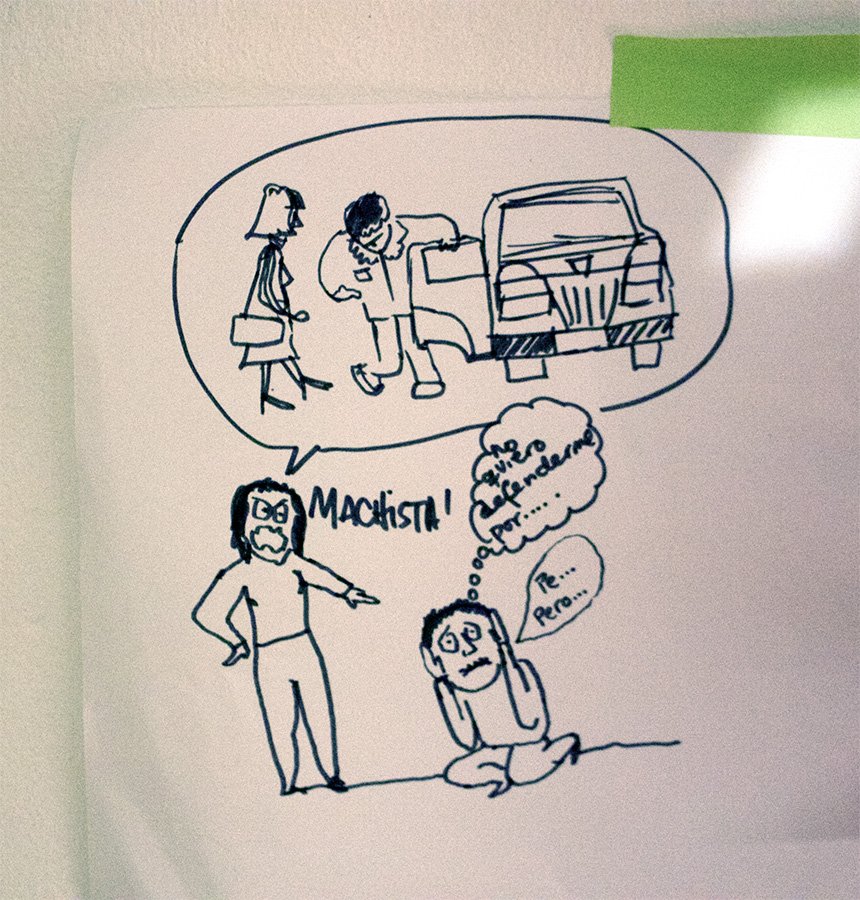
Drawing made by participants. 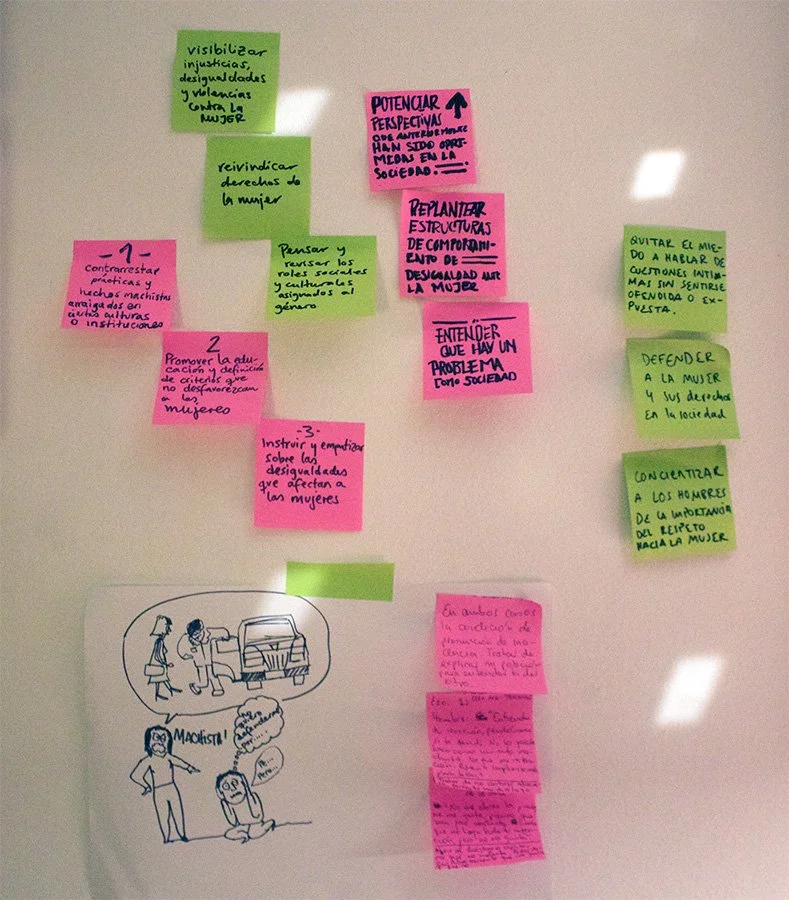
Post-its from the co-creation session.The participant’s encounters with feminist-identifying people and media had left them feeling judged, and from that judgment they concluded the movement was aggressive and irrational. Therefore, it was not something they believed could actually improve their daily lives.
-
"I can't say I'm a feminist because then they immediately don't wan't to work with us anymore"
—Co-founder, gender equity consultancy (Bogotá), In-depth Interview, 2017.
-
"I don't know how to act anymore! I could screw it up at every turn!"
—Male participant (late 20s, Bogotá), Co-creation Session, 2017
I interviewed experts to understand real-world consequences of the gap.
Then I interviewed four practitioners applying feminist theory inside institutions, where the stigma carries professional cost. They confirmed it from the other side: the word itself was the obstacle.
Opportunity
Design a service that leverages creativity and community to lower the barrier- to-entry of feminist knowledge (feeling judged), supporting the journey from being a shy beginner to actually understanding academic and collective proposals for change.
THE SERVICE DESIGNSo I designed a service that would support users in their journey towards feminist creativity.
The service consisted of 3 main experiences: learning, sharing, co-creating. Each experience was designed to balance out the main emotional pain points I uncovered in the research that kept people away from feminism.
Feminist creativity is needed because these users need bottom-up approaches. Gender inequality solutions feel imposed (top-down), so the service was meant to help people develop de capabilities needed to use their own creativity to design solutions to whatever inequality problems they were actually facing in their community.
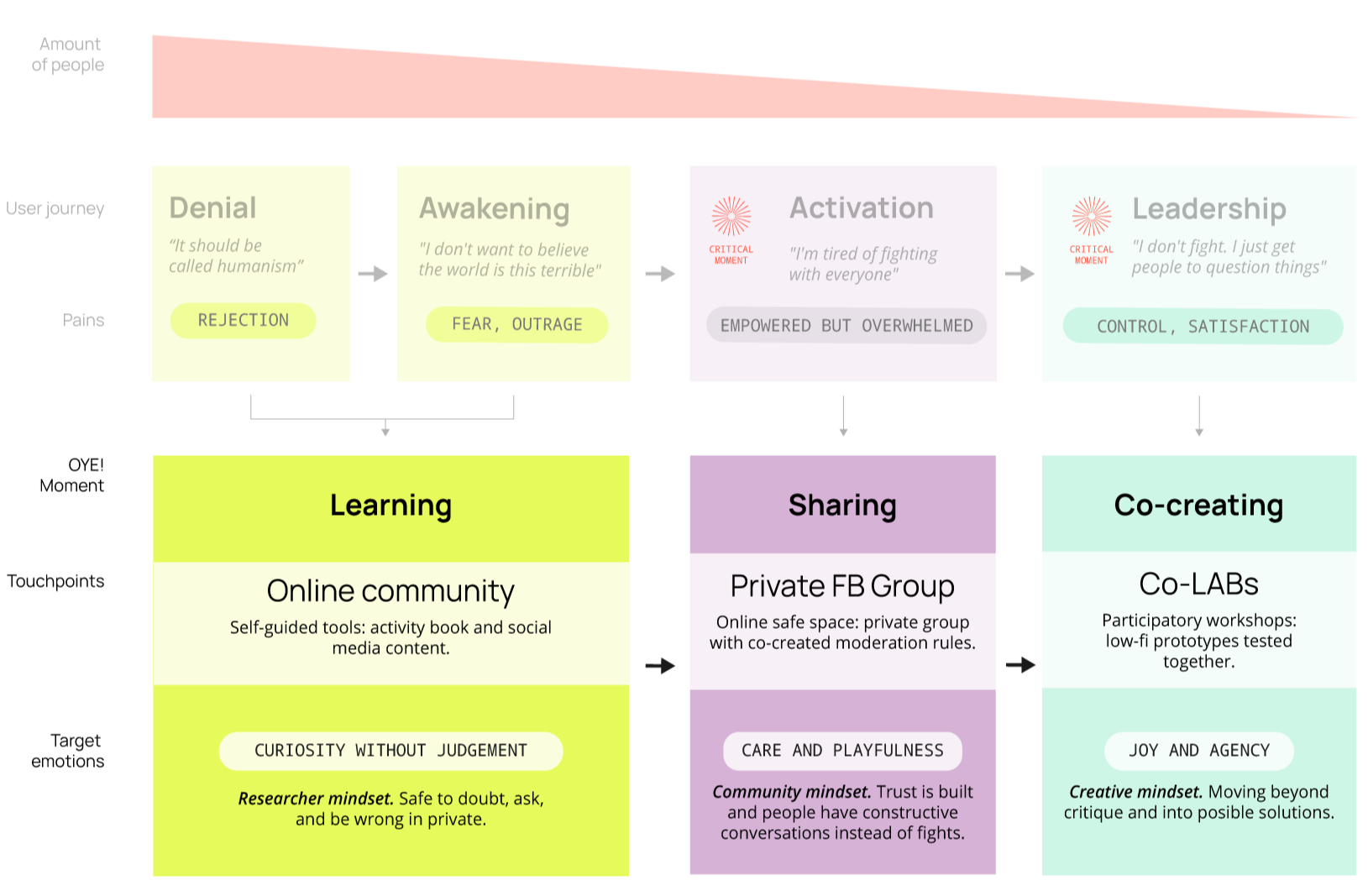
Simplified service blueprint for OYE!What does a community feminist service look like? Educational, participatory and creative.
Curiosity leads. Nobody is condemned for asking the wrong question.
Everyone builds, nobody defends. Problems get solved together, not debated.
Innocence is the assumption. The goal is to educate, never to accuse.
Joy replaces fear. Play and an always-in-beta attitude make mistakes cheap.
OYE! Pilot
Before launching, I designed a co-creation session to test the experience I designed.
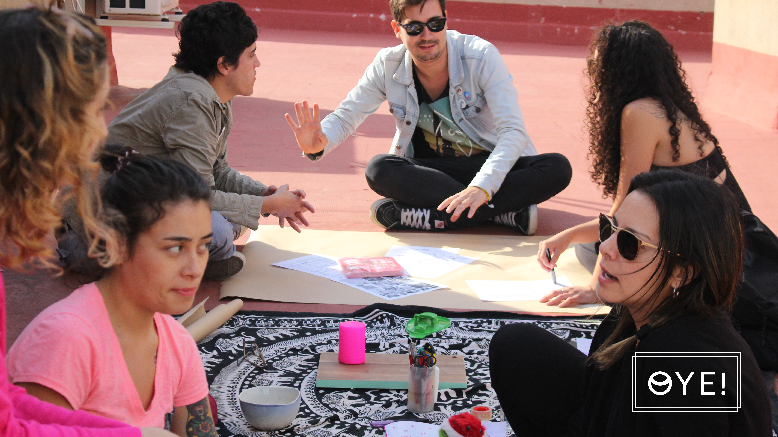
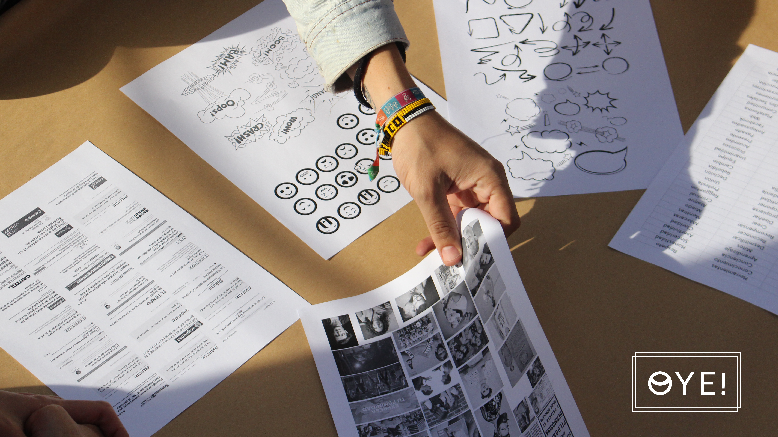
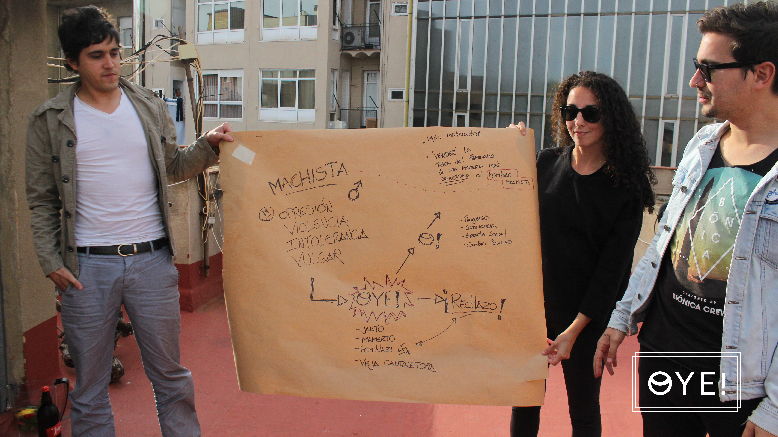
photos from the pilot co-creation session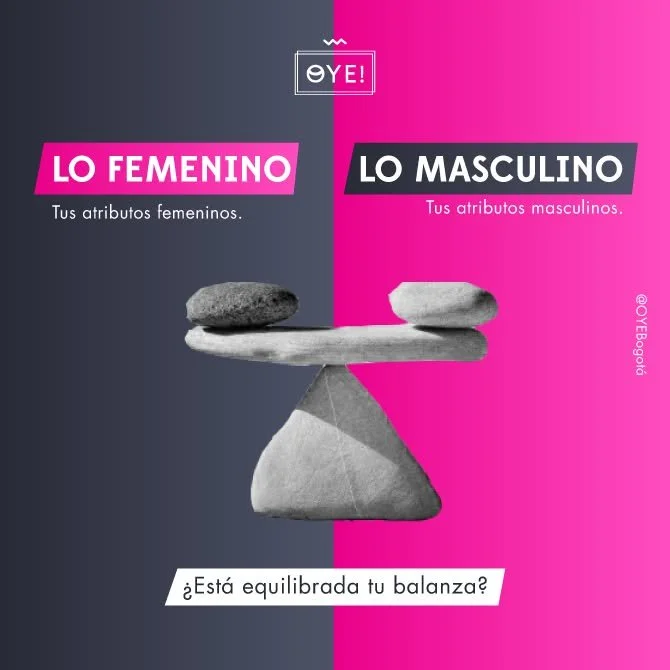
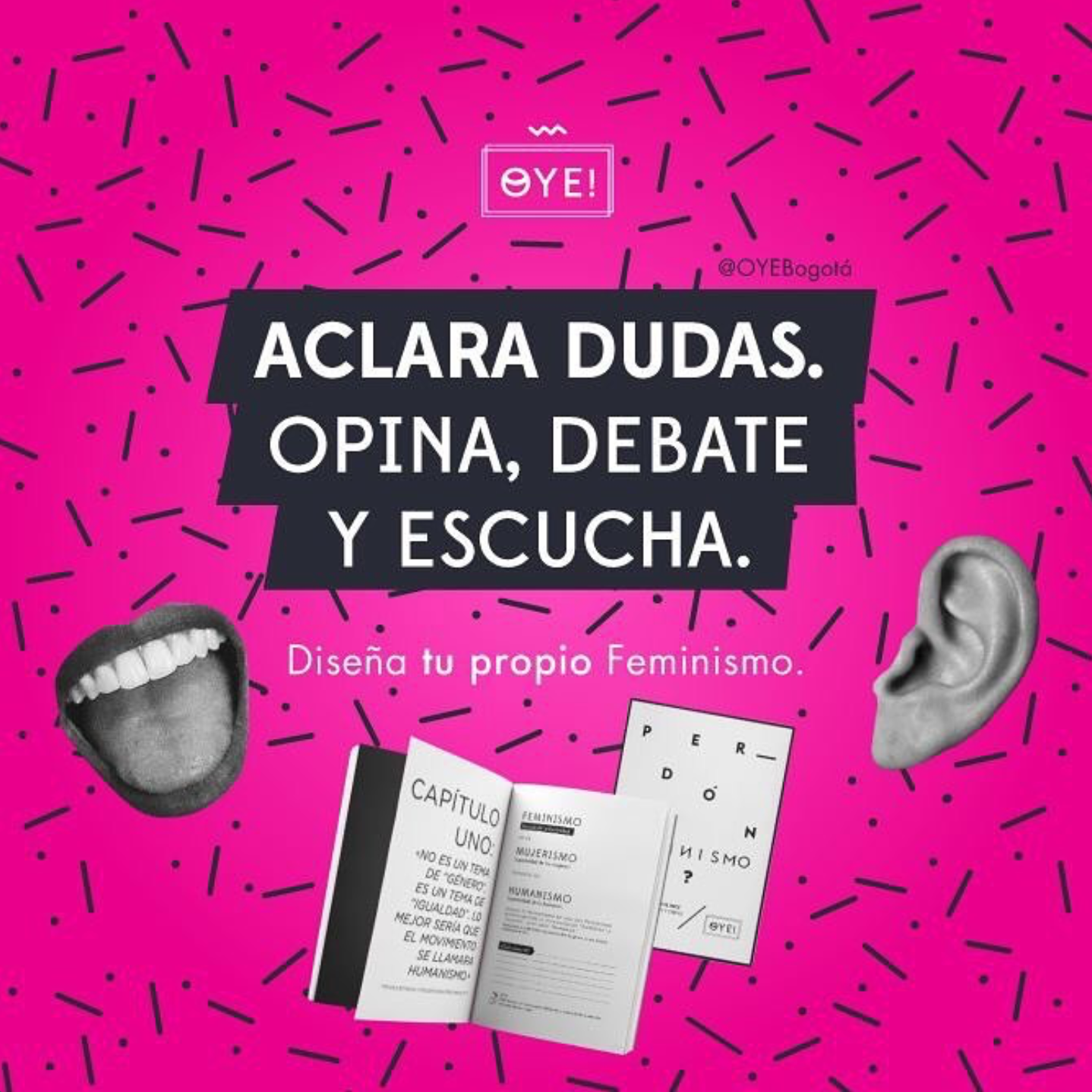
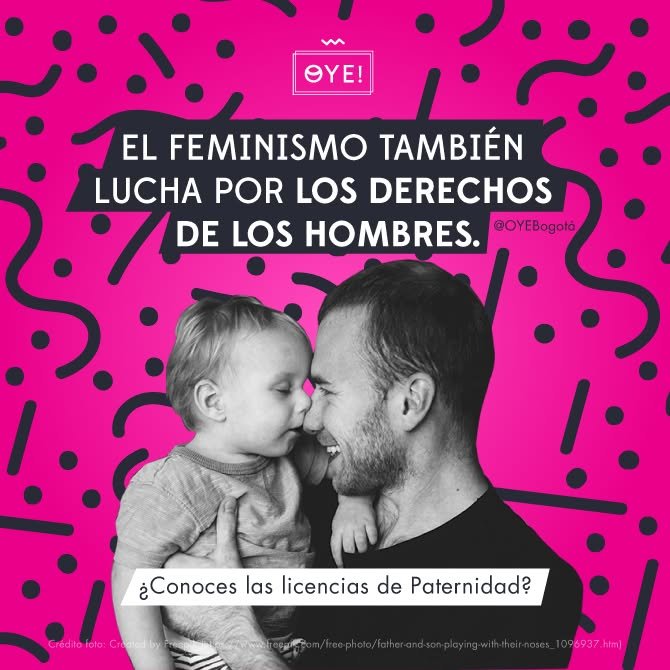
Sample posts from early Facebook Fan Page 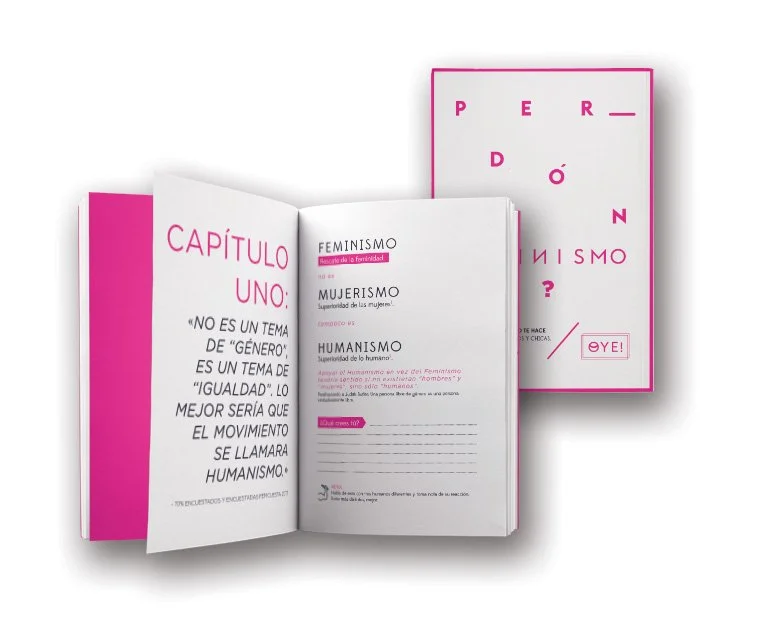
Activity book prototypeCo-creation session video