2 0 1 6 - 2 0 2 2OYE! Collective
A learning service for people who supported gender equality in theory, but avoided feminism in practice.
Project type
Learning service and community (freemium model)
Role
Founder and co-director, with Camila Rodas. Service design, brand, content and facilitation.
Scale
1.2K community, 320-member private group, 5 CoLABs across 3 cities, 3 podcast seasons
Results
Peer-reviewed chapter (2019), FIU Talks Barcelona, and our own method: Joy Design
THE PROBLEM with feminismMost people say they support gender equality. Why do they reject changes proposed by feminists?
In 2016, most people I knew said they supported gender equality. But when it came to feminism, they were unsure. They wanted the outcome but rejected the body of knowledge built by the people working toward it: the theory, the activism, the language.
Resistance looked ideological at the top and turned relational at the bottom. People weren't defending an opinion. They were protecting their relationships with themselves and others.
-
![]()
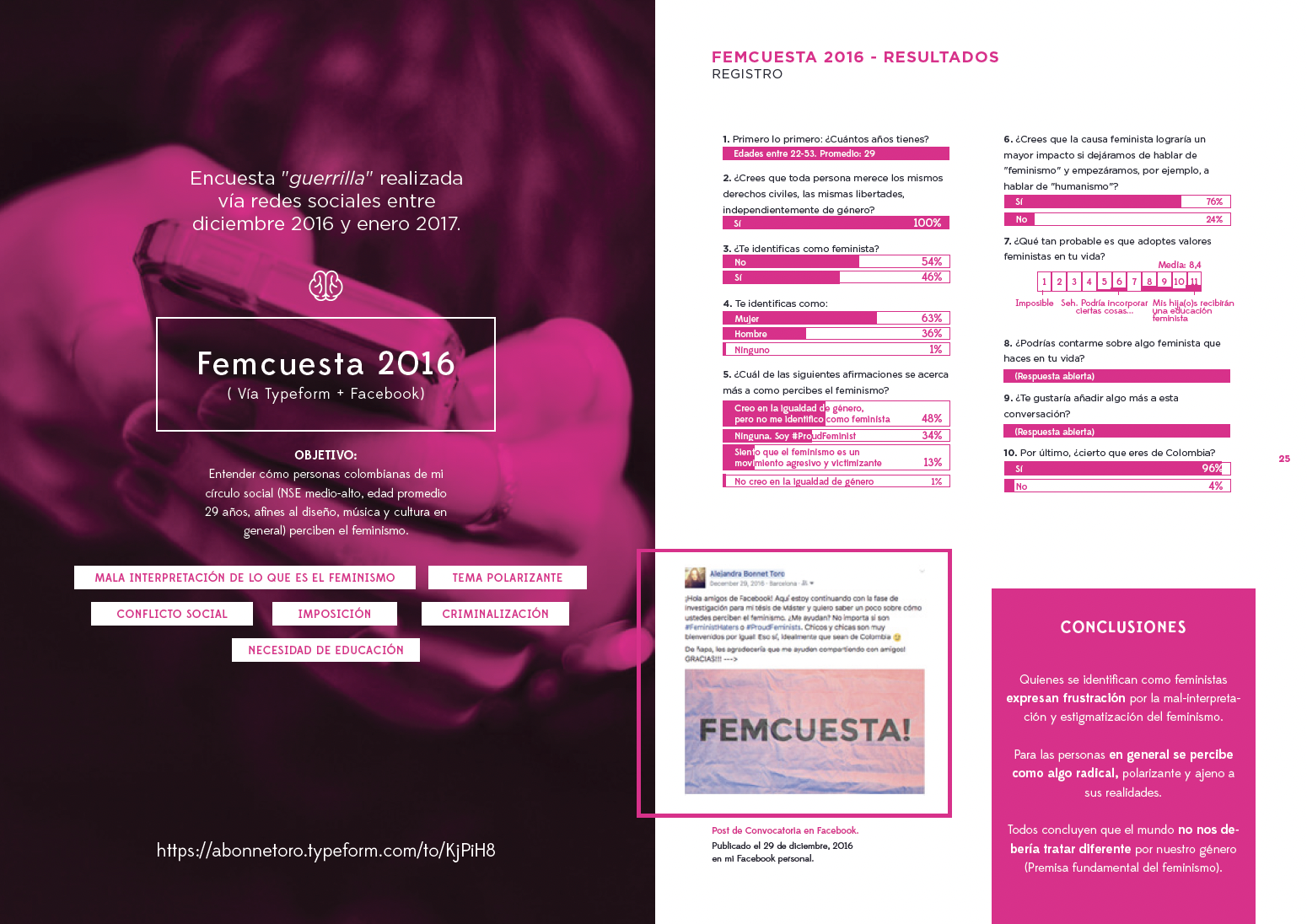
Exploratory survey report— 85 responses
-
![]()
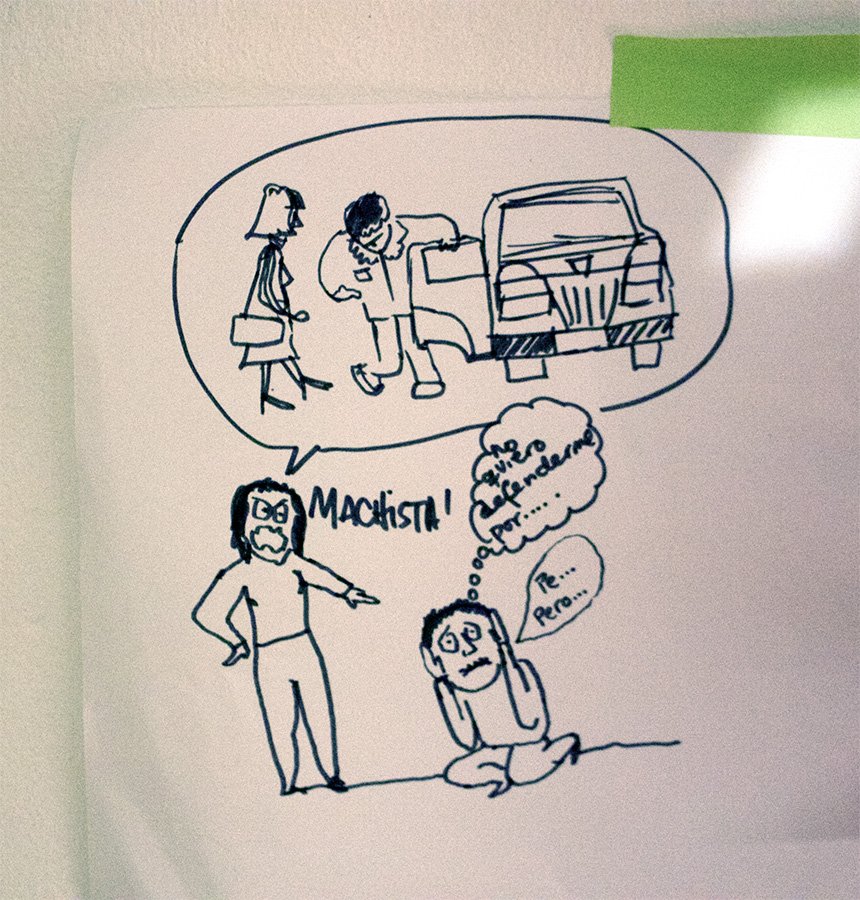
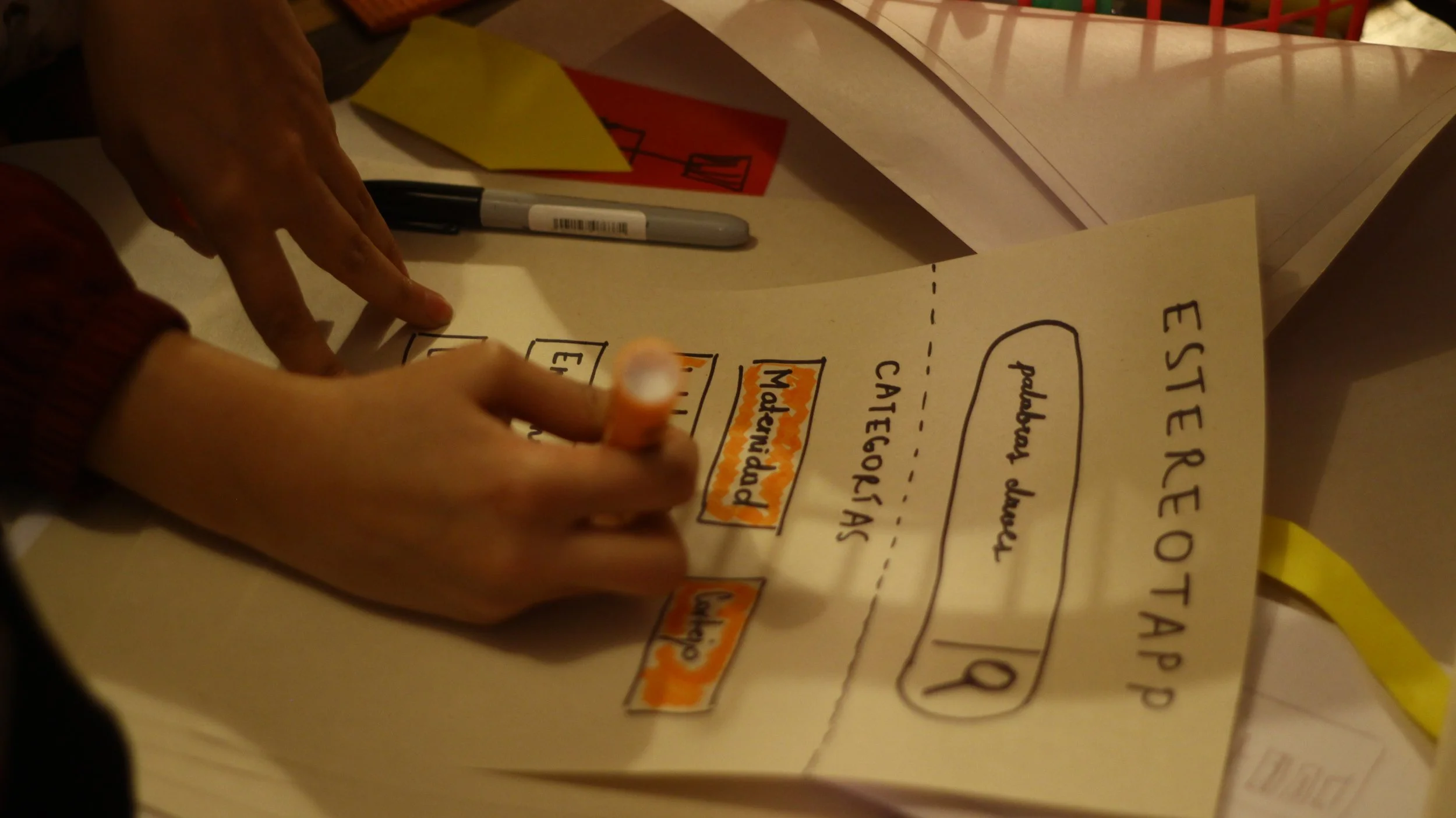
Drawing from co-creation session
-
![]()
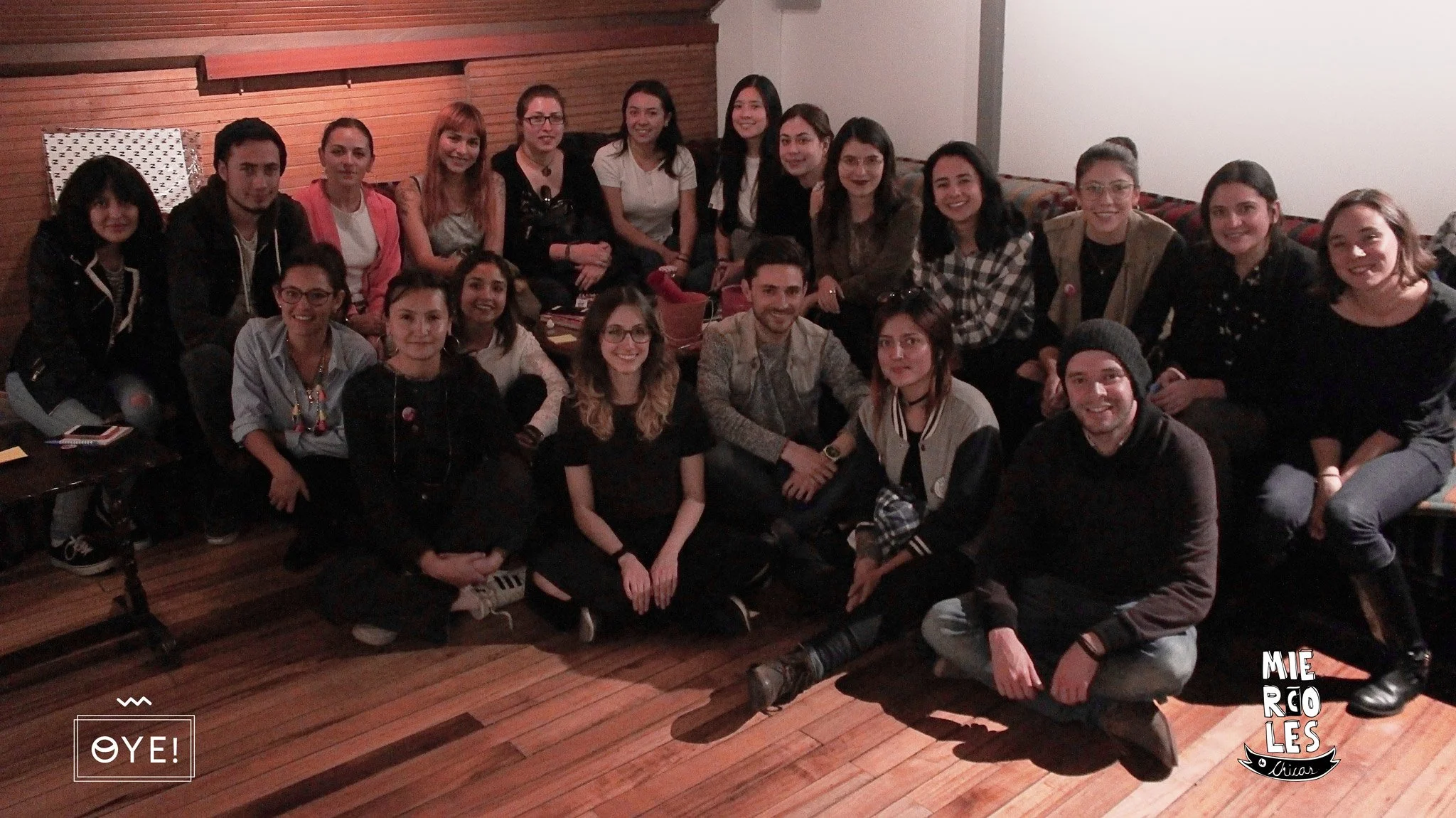
Co-creation session participants
-
![]()
Post-its from co-creation session
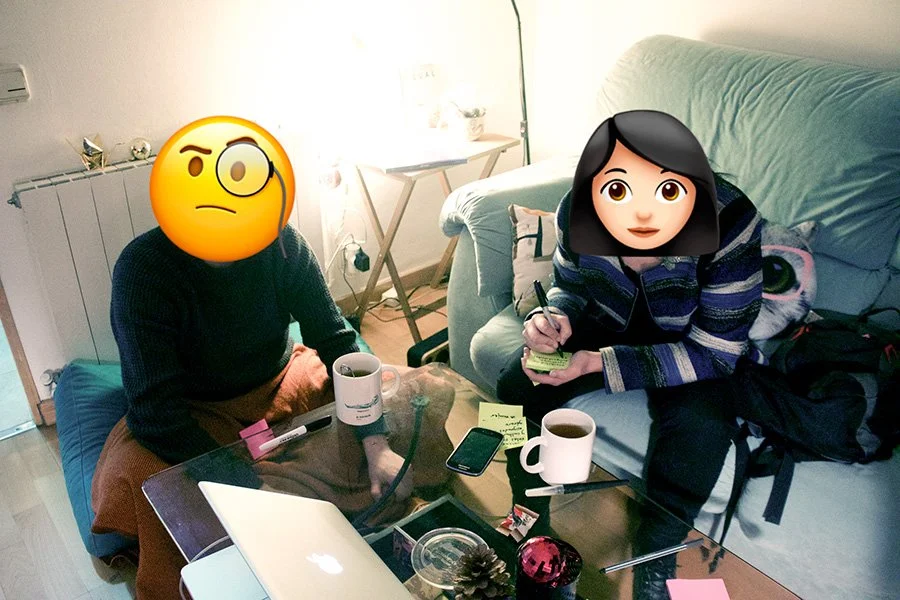
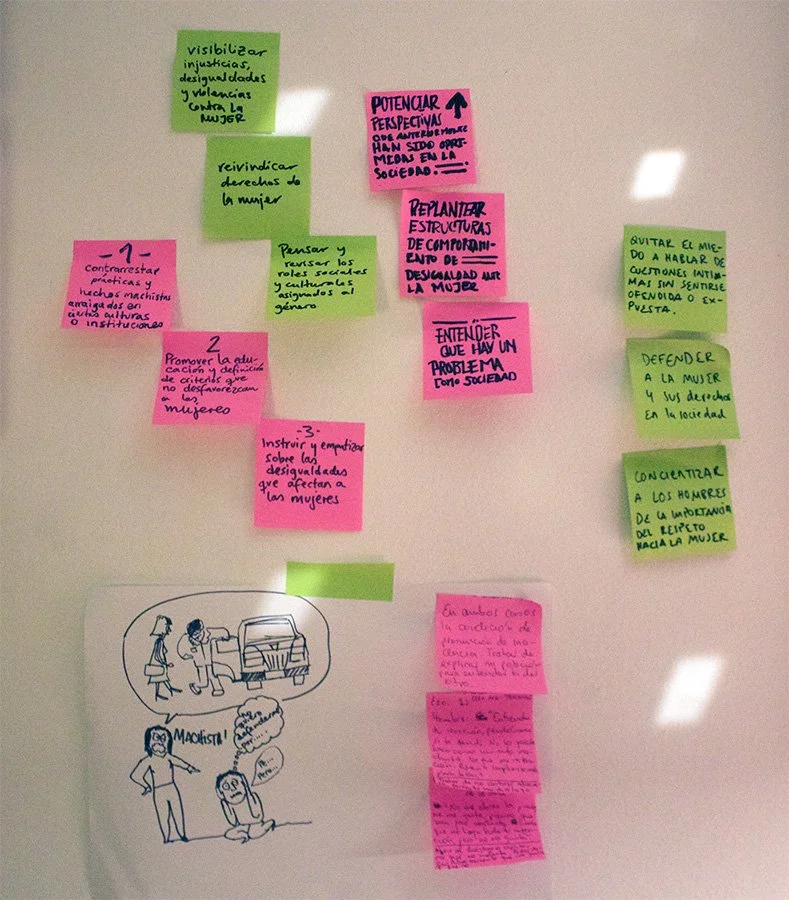
THE INSIGHTFor society to achieve gender equality, people must take feminist ideas seriously. Most people I spoke to didn’t.
The research showed an emotional blocker: they believed practising feminism could cost them the relationships they care about most.
How the research became the value proposition. The tools answer the job of understanding feminism, the community answers the fear of judgement, and the CoLABs answer the wish to be your own kind of feminist.
THE SERVICEDesigning a feminist learning journey around relationship wellbeing
Everyone was trying to explain feminism. What no one offered was a way to practice it without endangering their closest relationships. So I built learning around relationships: a service that fits the journey to becoming an active feminist, where people learn together and can voice doubts safely.
The service, mapped onto the journey it serves. Research showed people struggle with feminism at specific emotional moments of the journey. Each unresolved pain point loses people. Four interventions sit underneath to catch them exactly where the journey drops them.
BRAND & IDENTITYIf feminism feels threatening → create a caring identity
You don't have to become an enemy to engage with feminism.
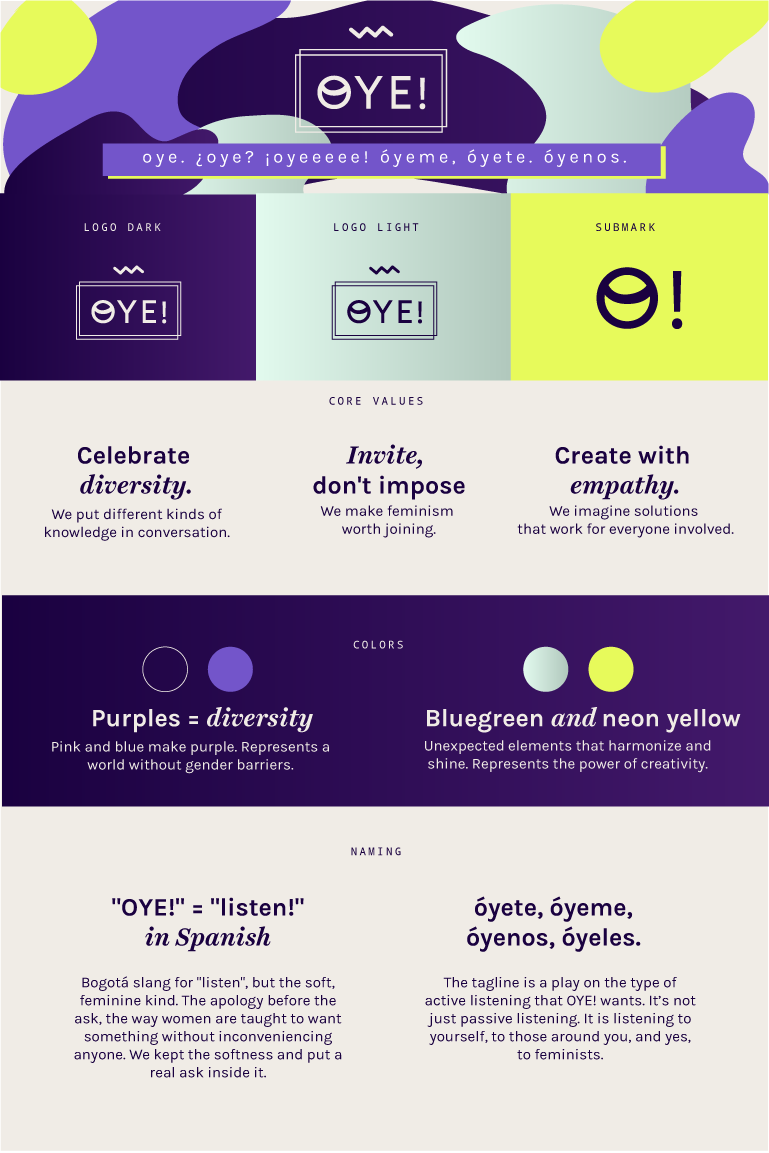
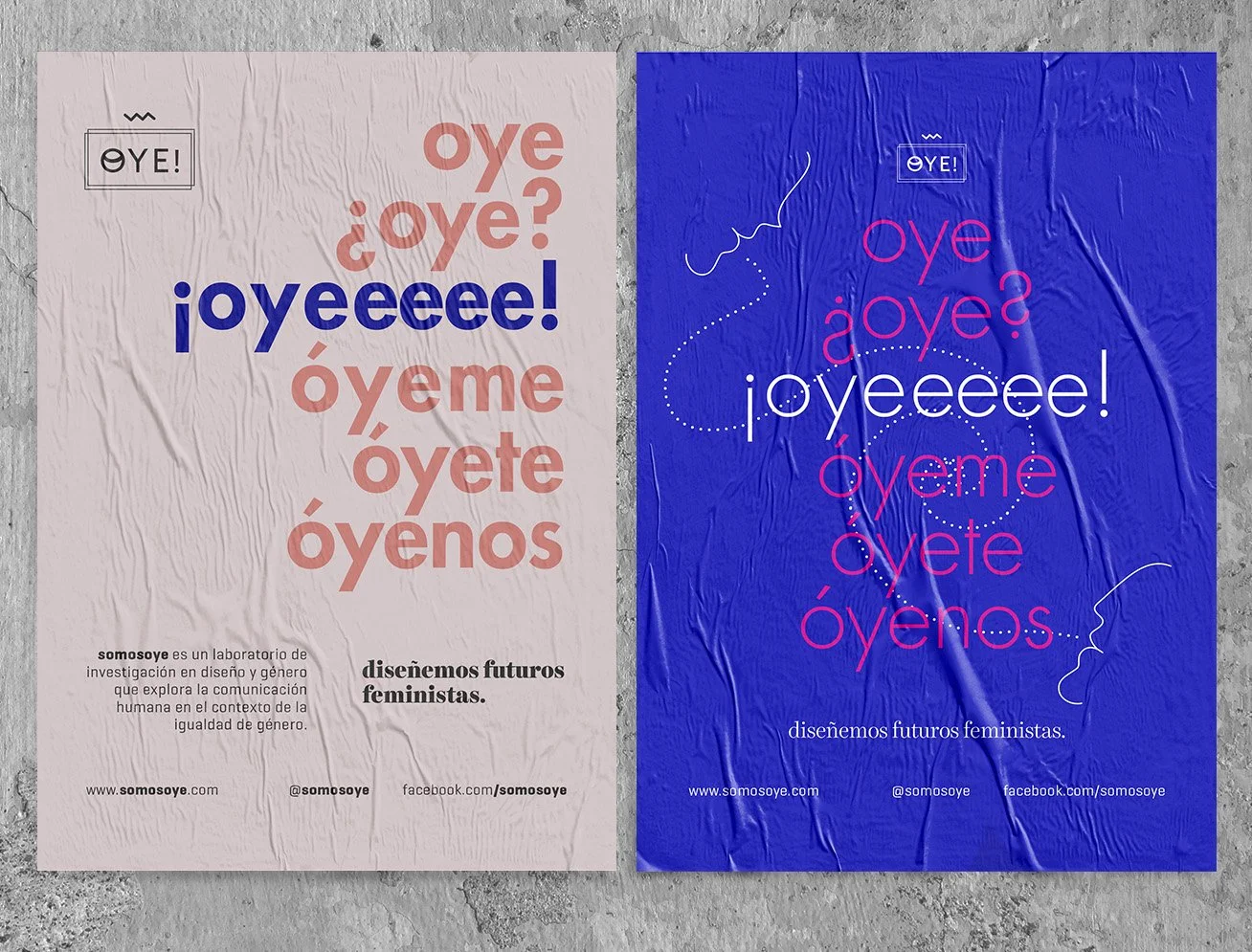
OYE’s identity, built to signal care and creativity. Reclaiming a word women use to ask for attention softly.
-
![]()
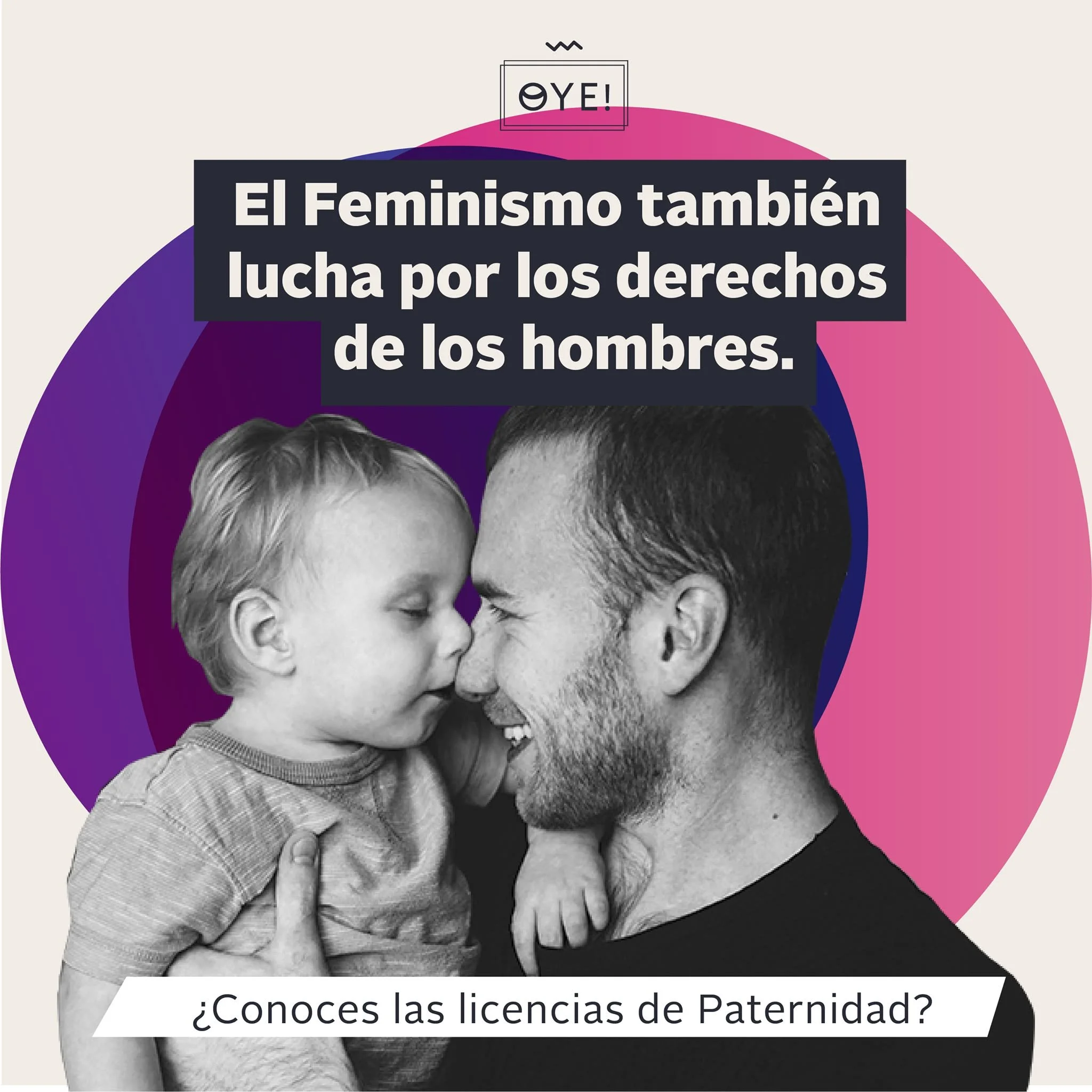
IG Post about paternity leave: "Feminism also fights for men's rights"
-
![]()
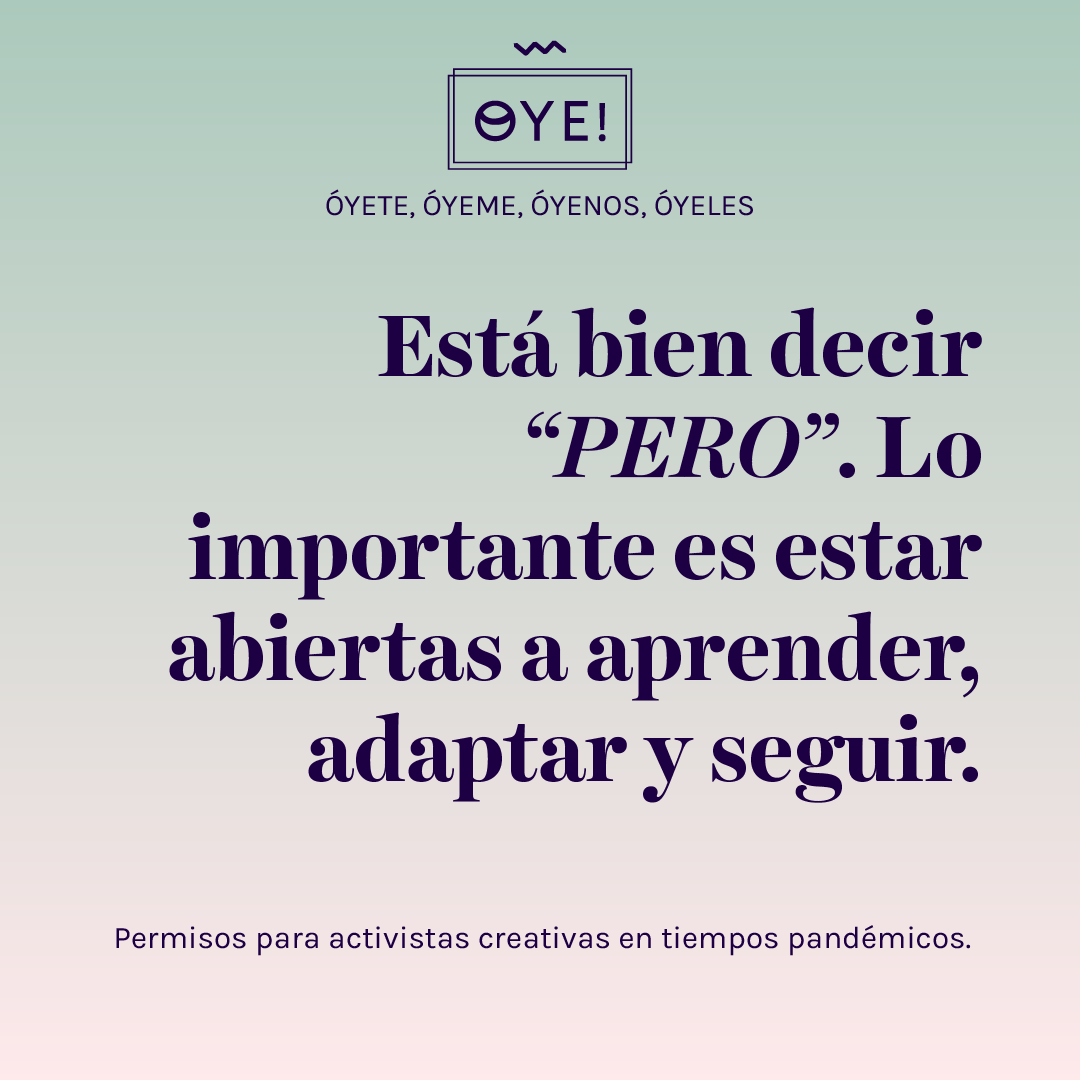
IG Post about navigating criticism: It's ok to say "but". The important thing is to be open to learning, adapting, and moving forward.
-
![]()
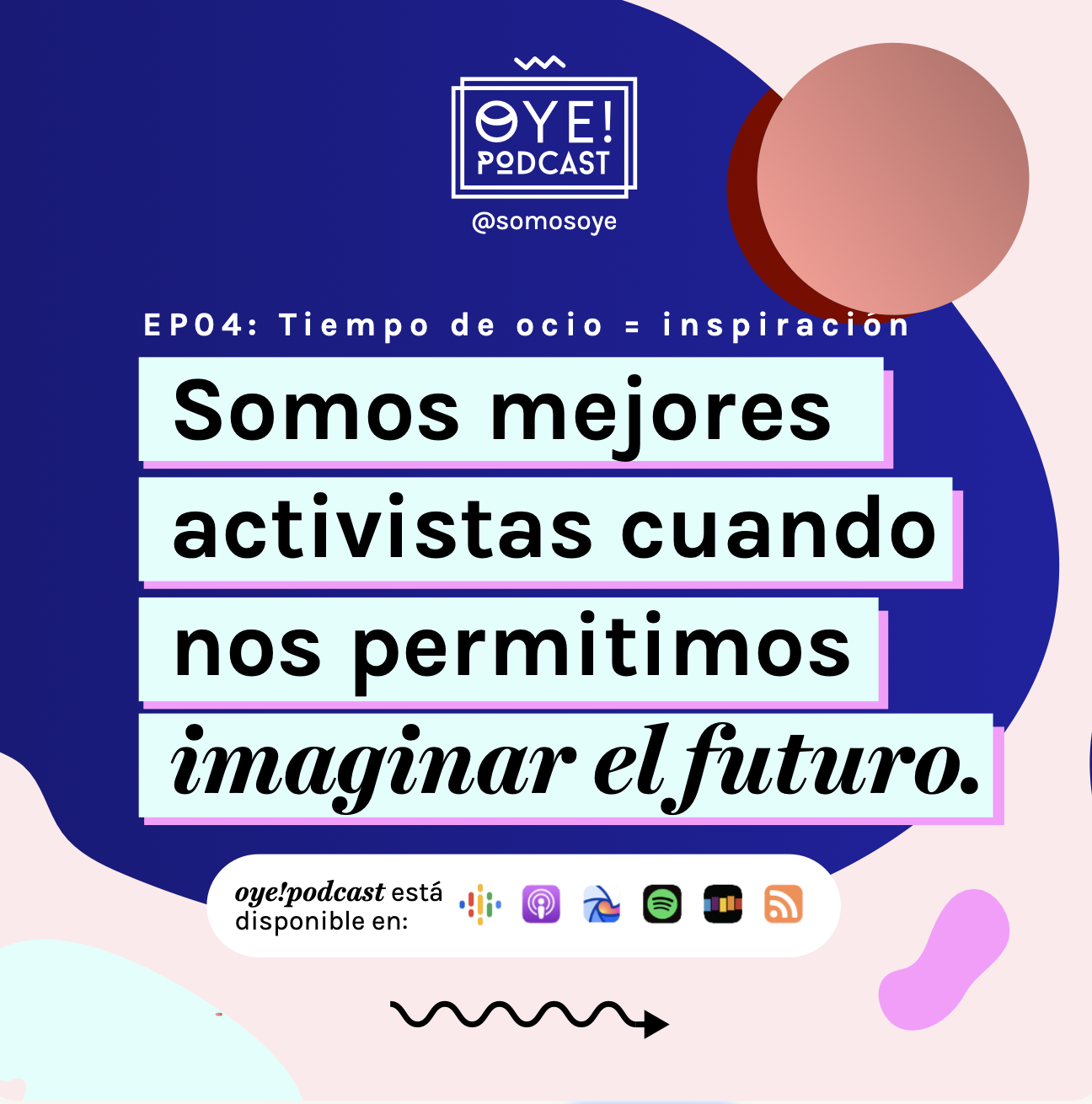
IG Post: We are better activists when we allow ourselves to *imagine* the future.
Self-guided toolsIf certainty creates defensiveness → create space for exploration
You can figure this out for yourself.
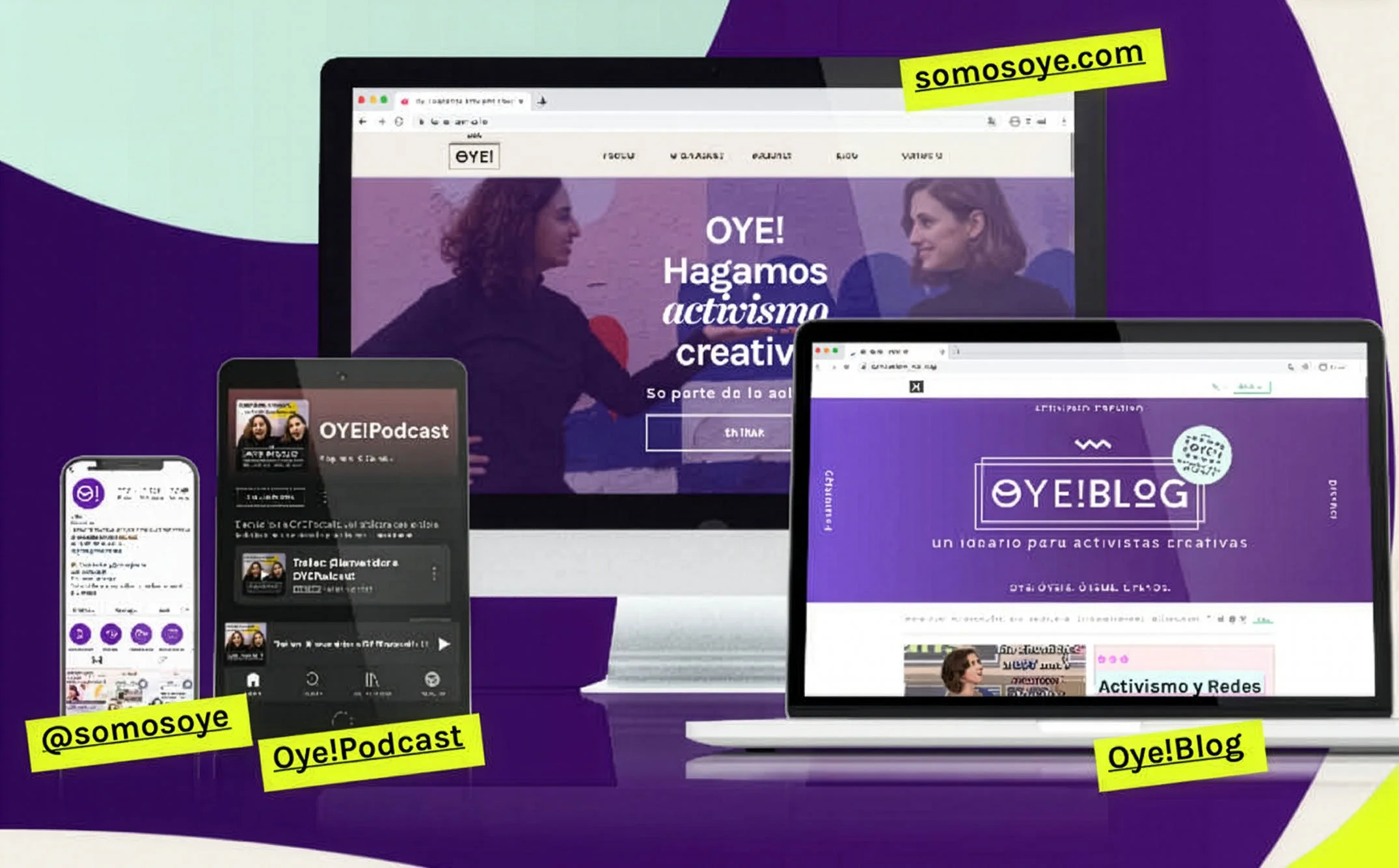
OYE!' Collective’s digital touchpoints for individual exploration.
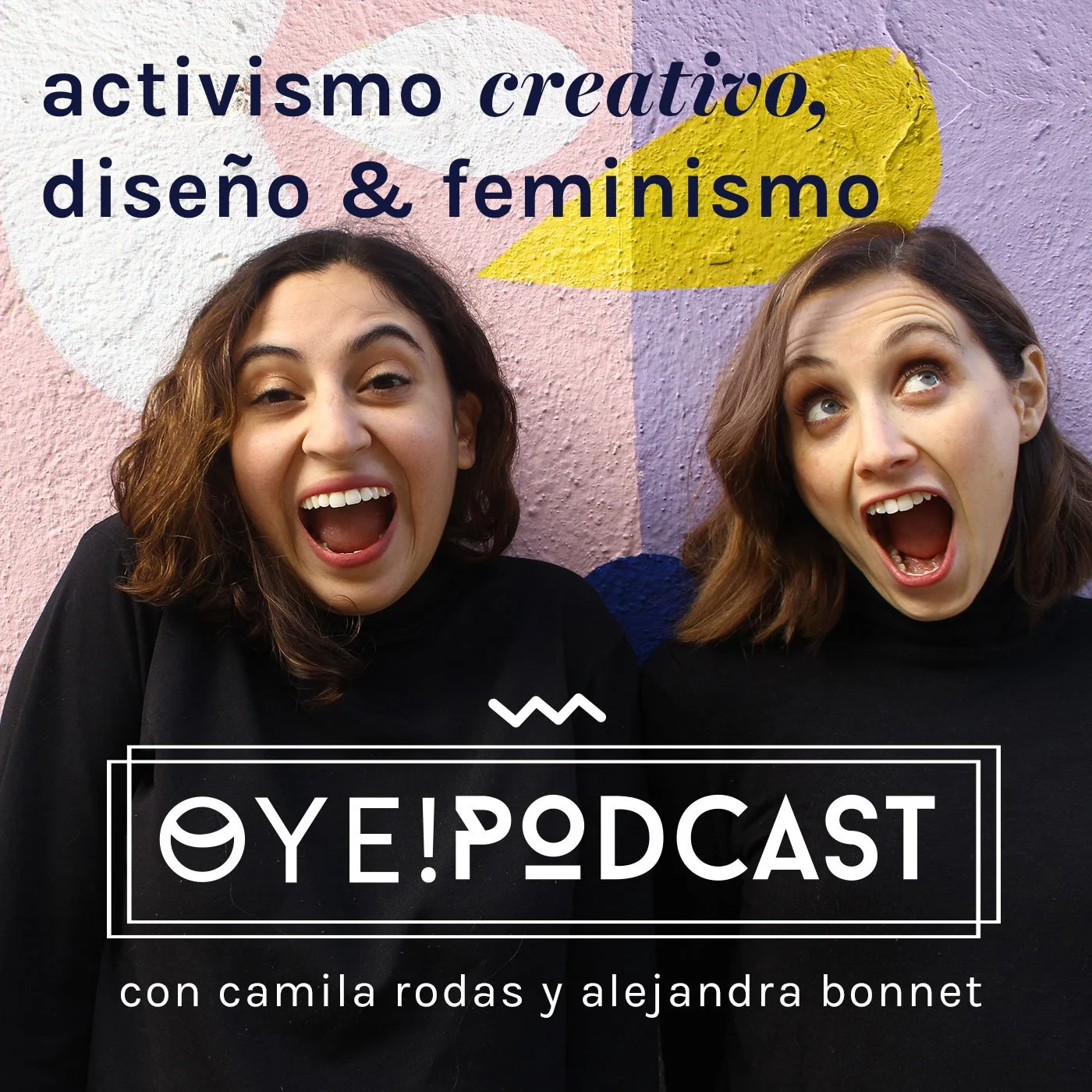
Vídeo Trailer for OYE!Podcast (click to listen!). Sharing what we know and making sense of it, together.
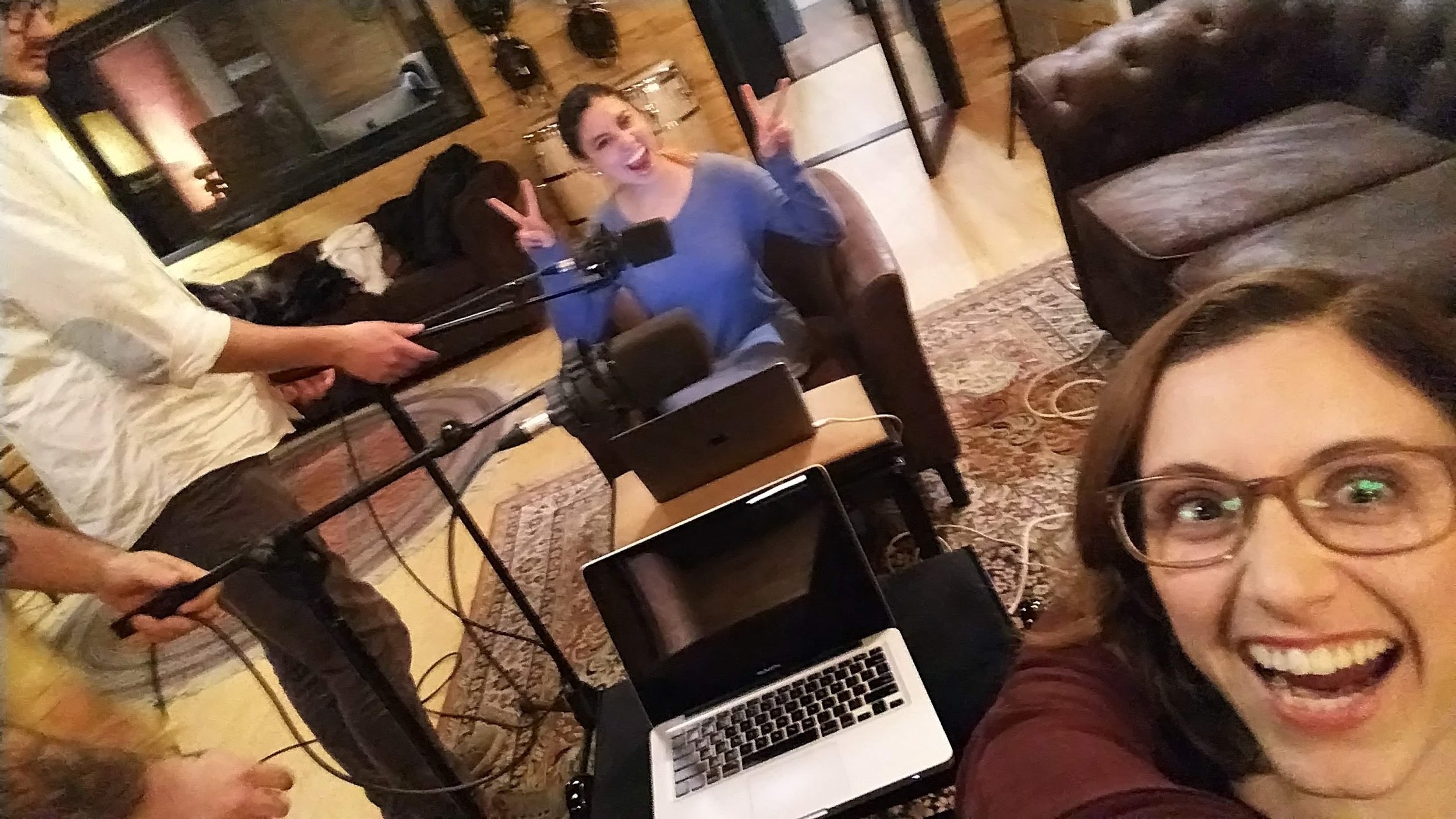
OYE!Podcast team: Ricardo Osorno, Camila Rodas, Alejandra Bonnet (me).
-
![]()
Activity workbook for self exploration
-
![]()
Instagram community - 1.2K members
-
![]()
A blog to share ideas
-
![]()
A private online group - 320 members
-
![]()
A podcast - 3 seasons
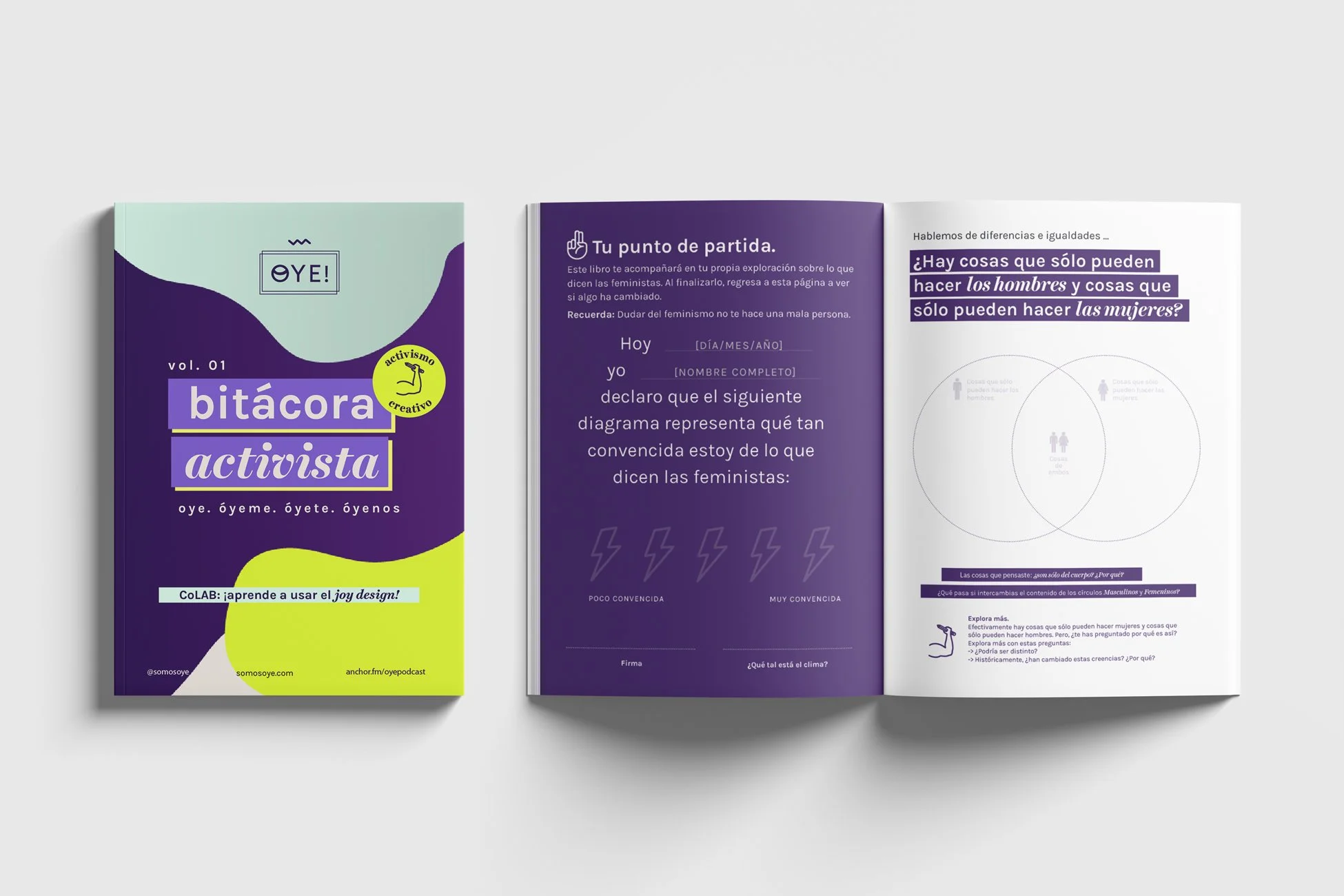
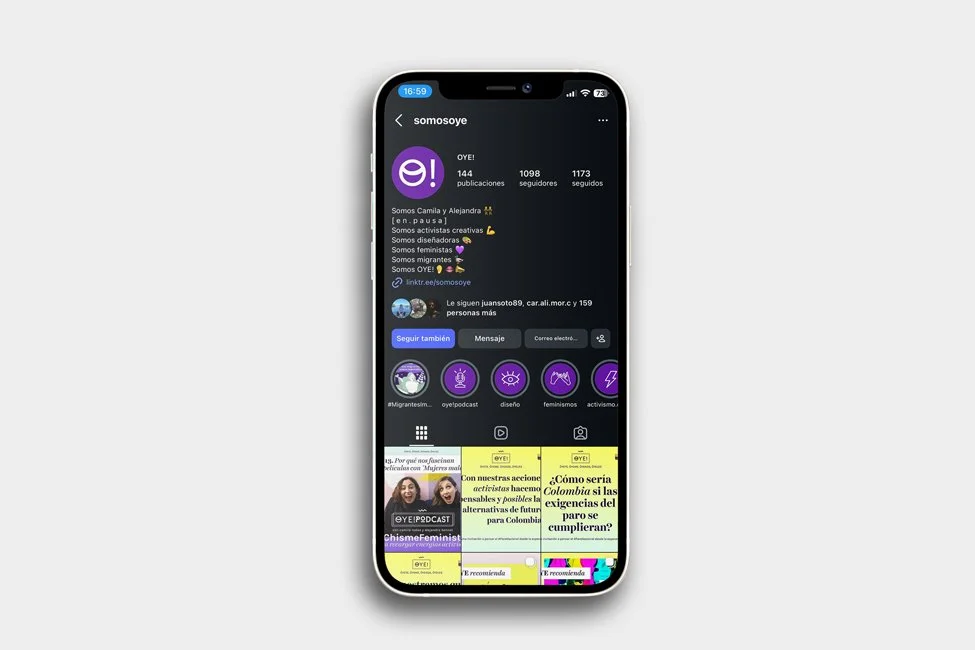
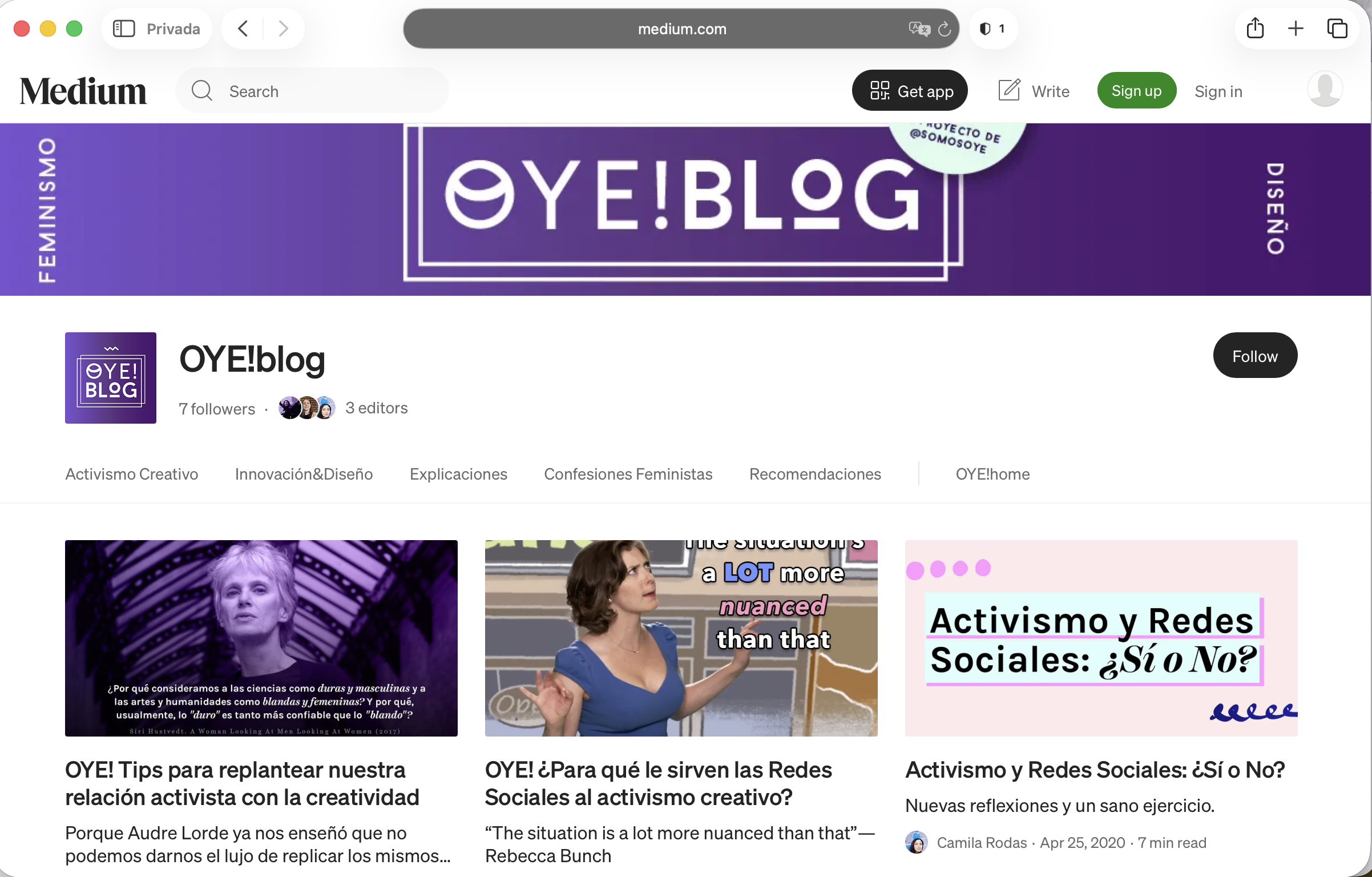
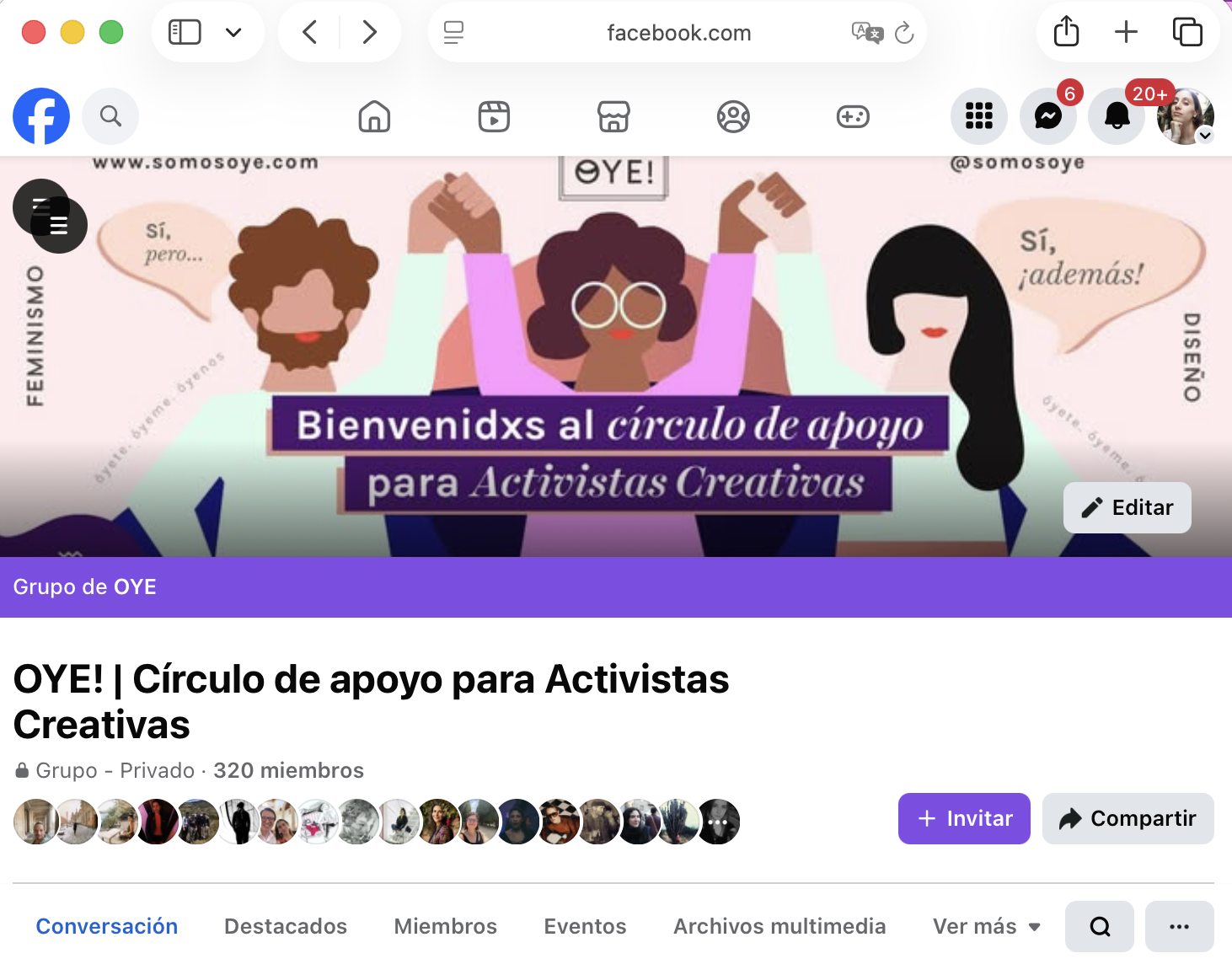
dialogue and cooperationIf disagreement threatens relationships → promote safe dialogue
We can disagree without being attacked or ostracised.
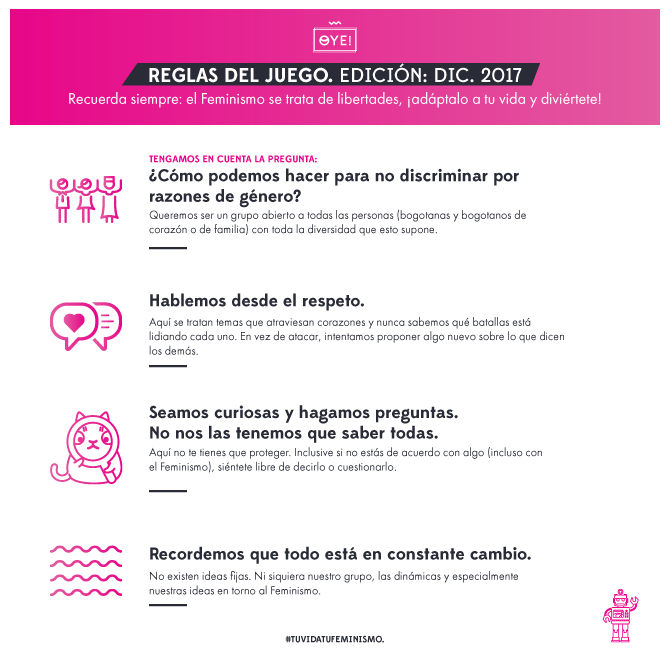
Community rules (2017 edition). Written with the community, and the reason people could disagree in the group without it turning into a fight.
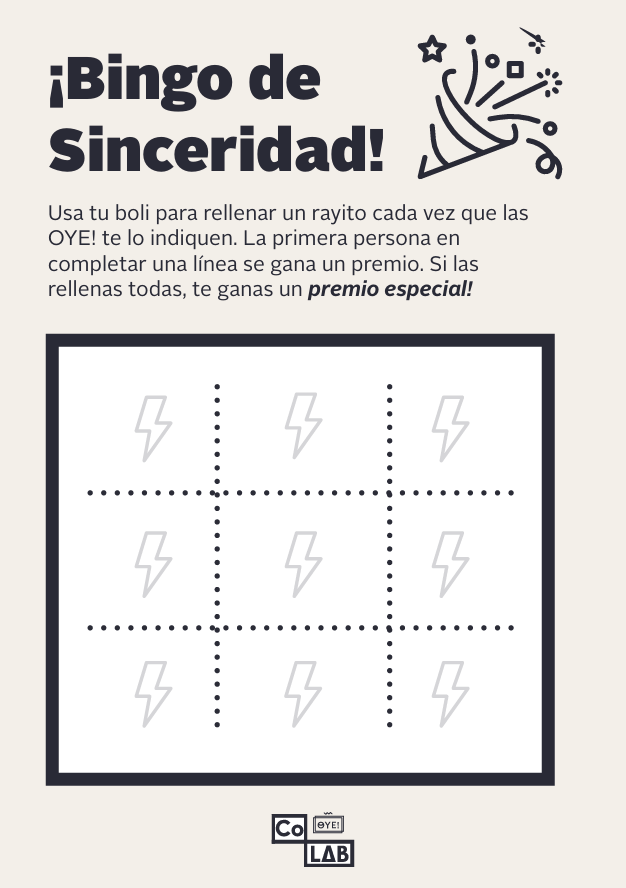
Sincerity Bingo: get a point each time you say what you really think. Used at CoLABs.
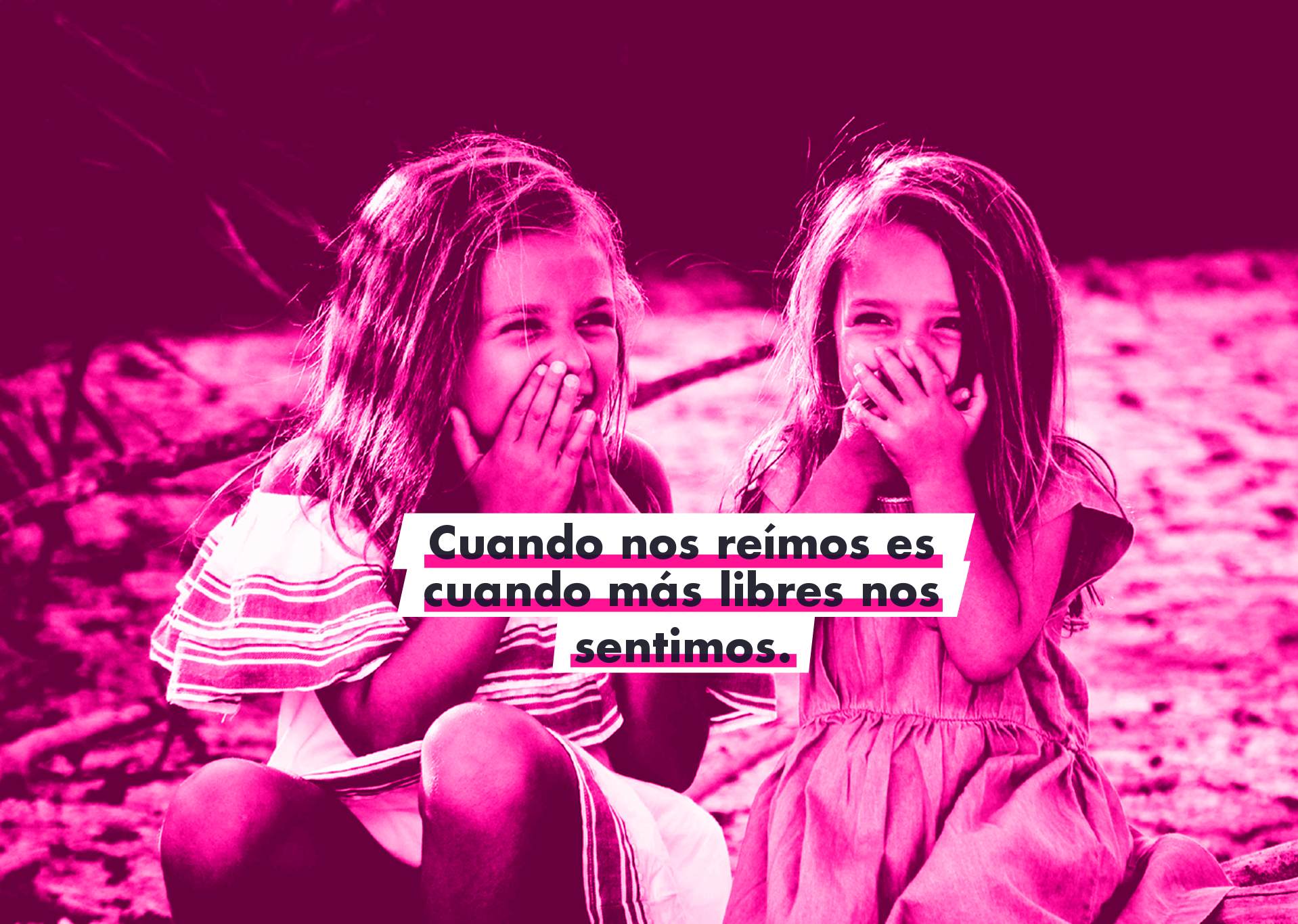
Laughter is a sign of freedom: slide from CoLAB presentations.
CoLABsWhen talking isn't enough → facilitate collective creativity
We can experiment with alternatives together.
Aftermovie of CoLABs 02 and 03 (Bogotá). Two hours of strangers designing feminist alternatives together, experimenting with our Joy Design methodology.
-
![]()
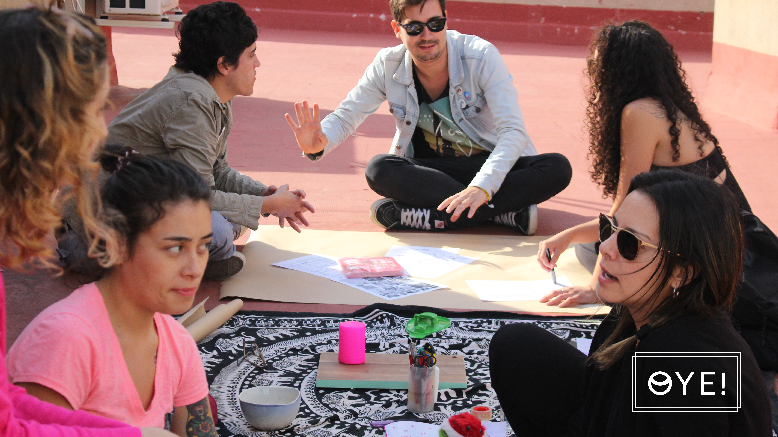
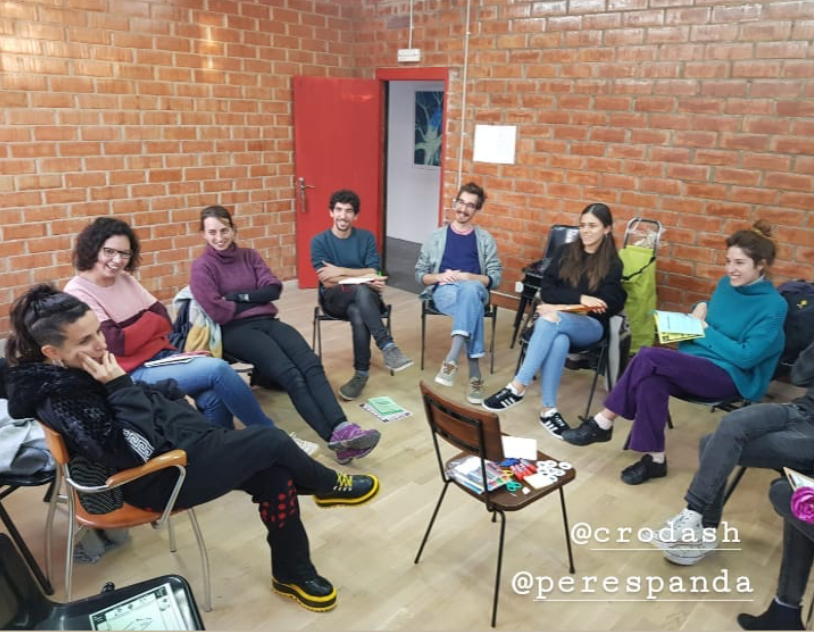
CoLAB 01 - Feminist Cupcake Rooftop Testin' (Barcelona)
-
![]()
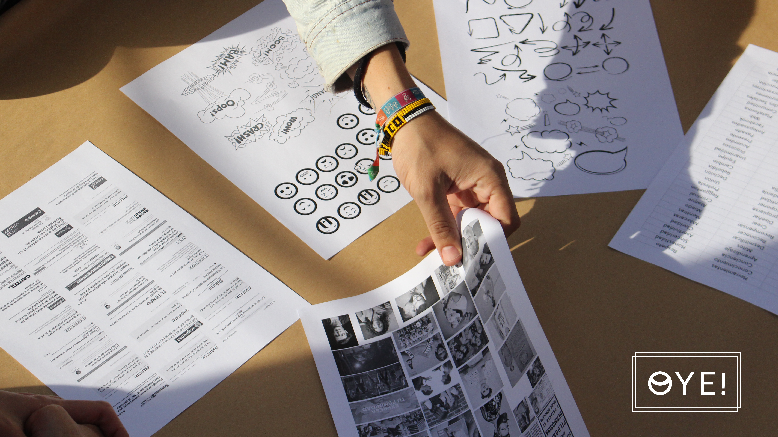
CoLAB 01 - Co-creation Toolkit
-
![]()
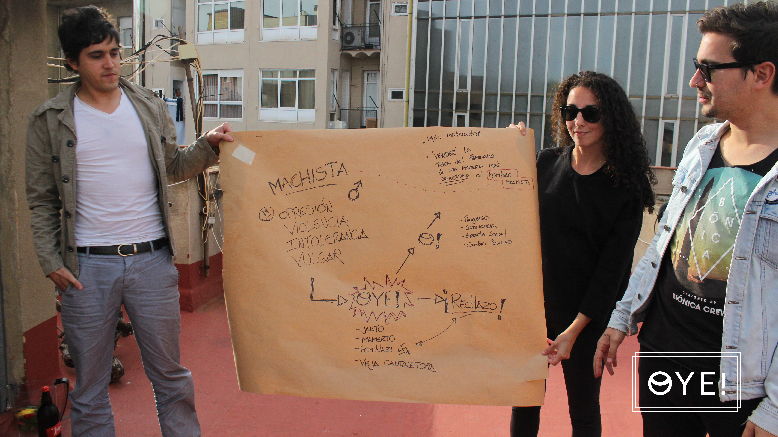
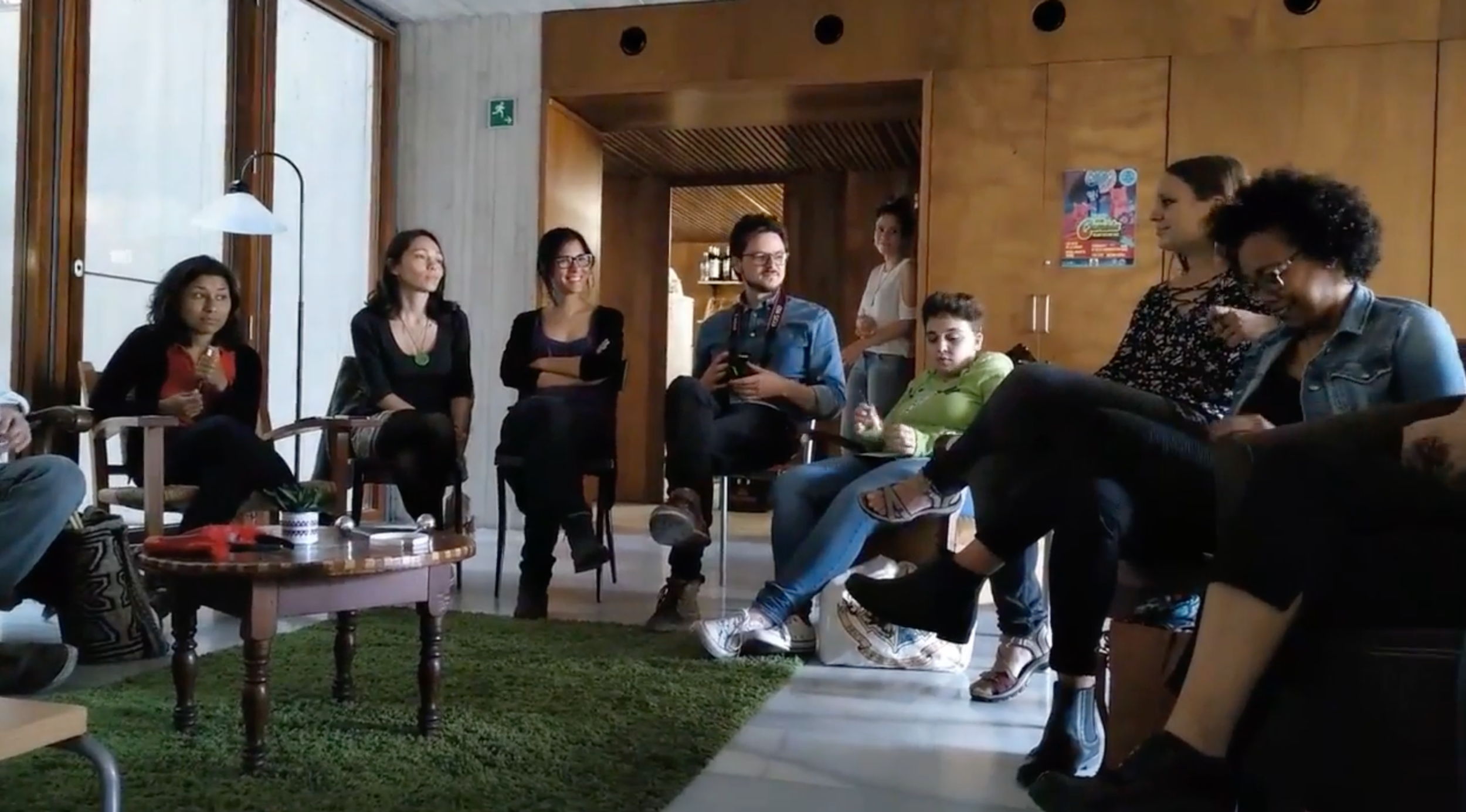
CoLAB 01 - Sharing ideas with the group
-
![]()
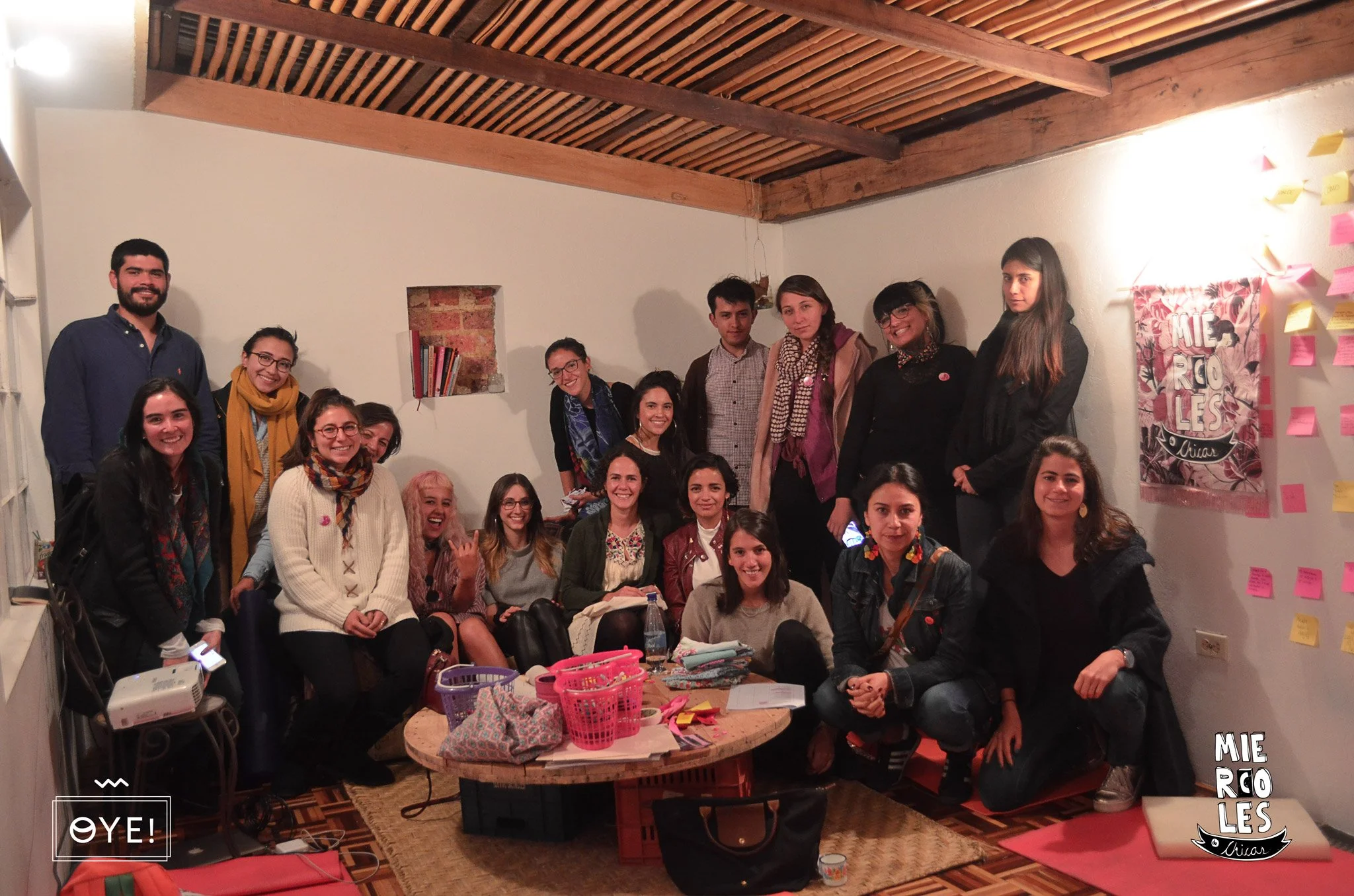
CoLAB 2 - ¡OYE! ¿Diseñamos nuestro feminismo? (Bogotá)
-
![]()
CoLAB 03 - CoLAB 2 - ¡OYE! ¿Diseñamos nuestro feminismo? (Bogotá)
-
![]()
CoLAB 04 - ¡Diseñemos le festival del futuro! (Valencia)
-
![]()
CoLAB 05: Festival CruCruCru (Barcelona)
-
![]()
CoLAB 02 - A protoype co-designed by participants
Results: A peer-reviewed chapter published by Fundación Universitaria Compensar (Colombia, 2019)
Camila and I wrote a paper called “Service Design como metodología de análisis de la comunicación por la igualdad de género de Bogotá: una propuesta del Colectivo OYE” . It was published in 2019, in the book “Convergencias de las humanidades en la transformación digital: una mirada desde la comunicación”, available
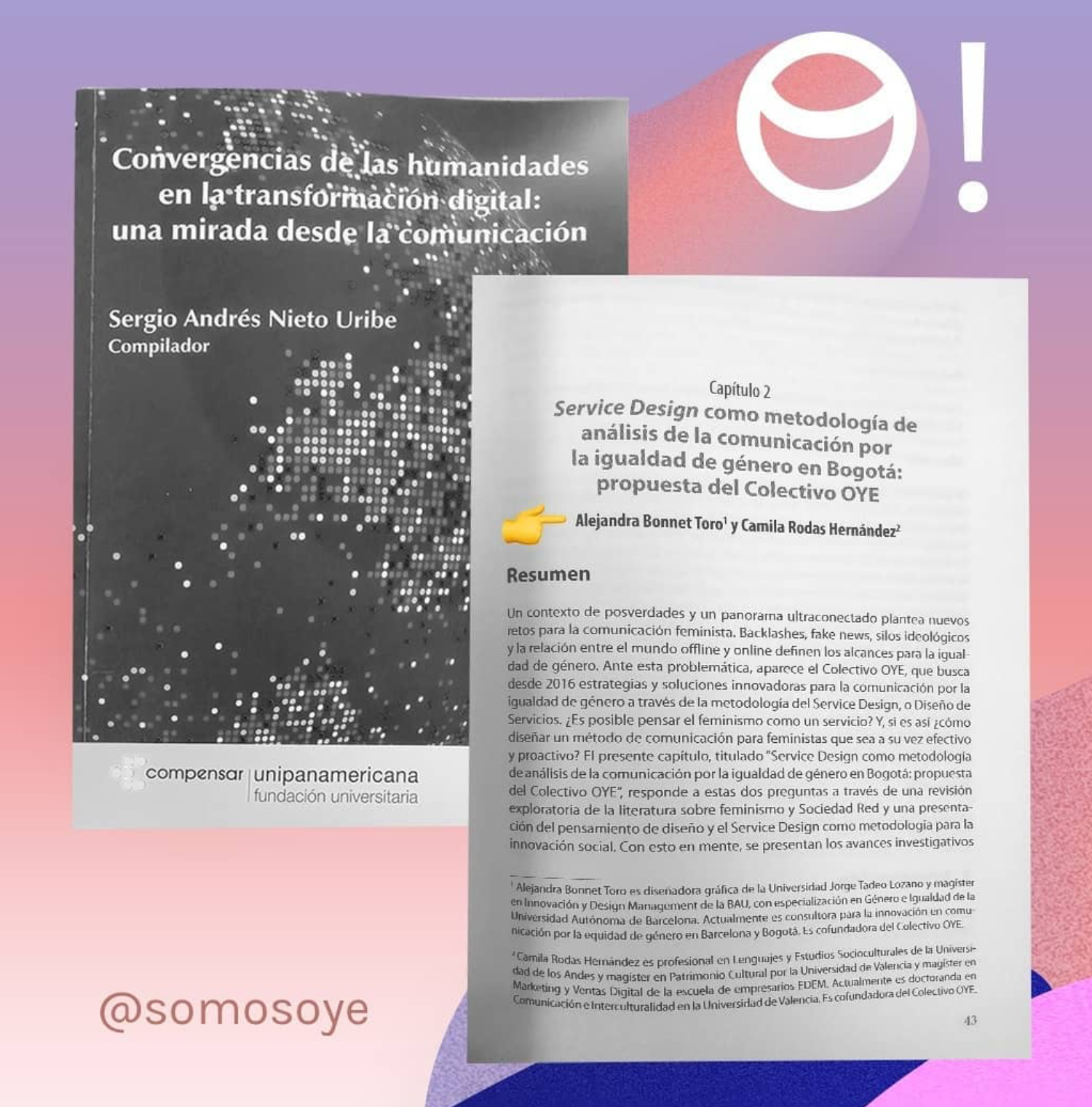
The chapter, and the book it appeared in. Peer review made the our way of using service design for gender equality something other people could cite and use.
Results: Presenting OYE! at FIU Talks (2019, Barcelona)
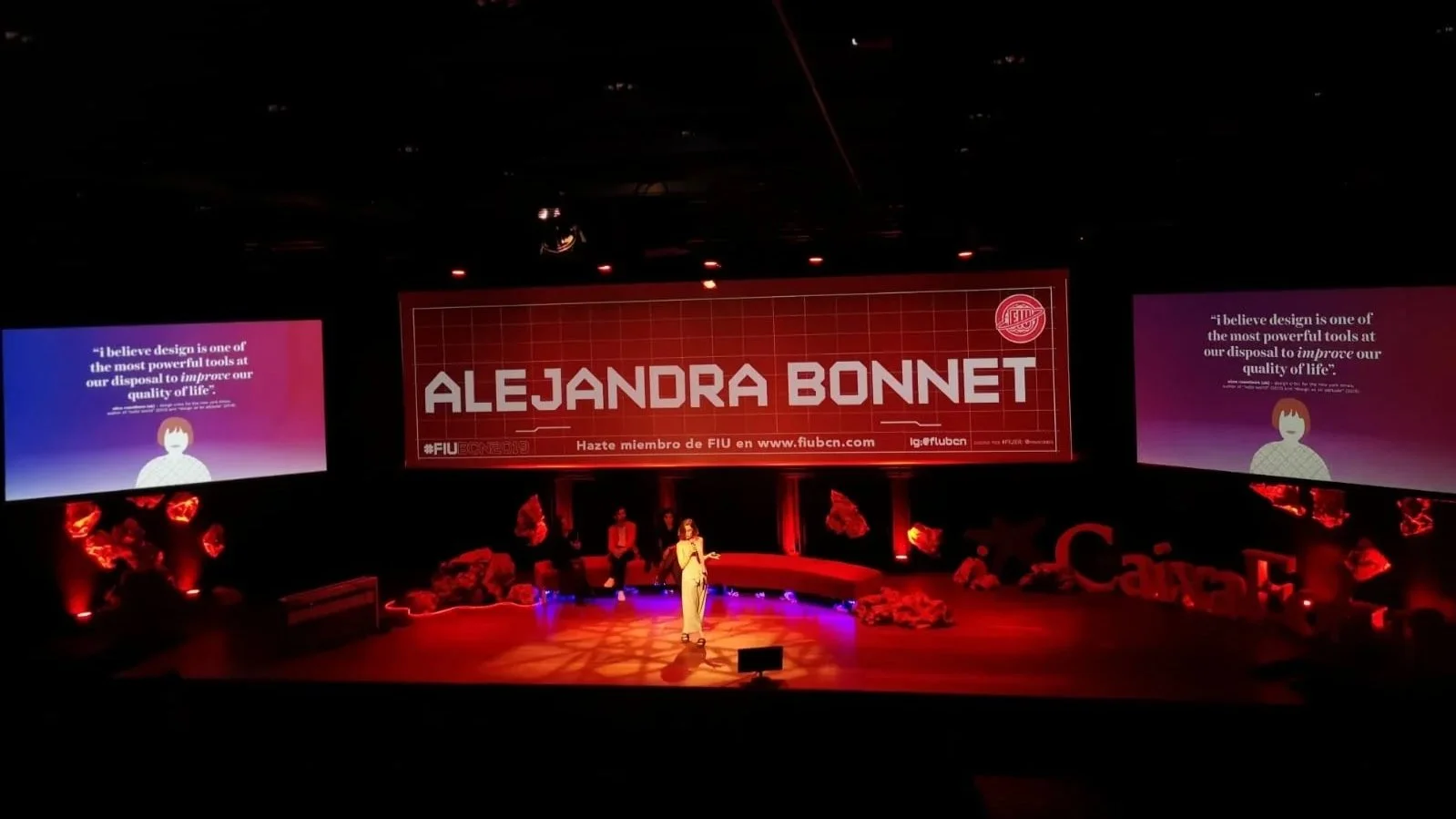
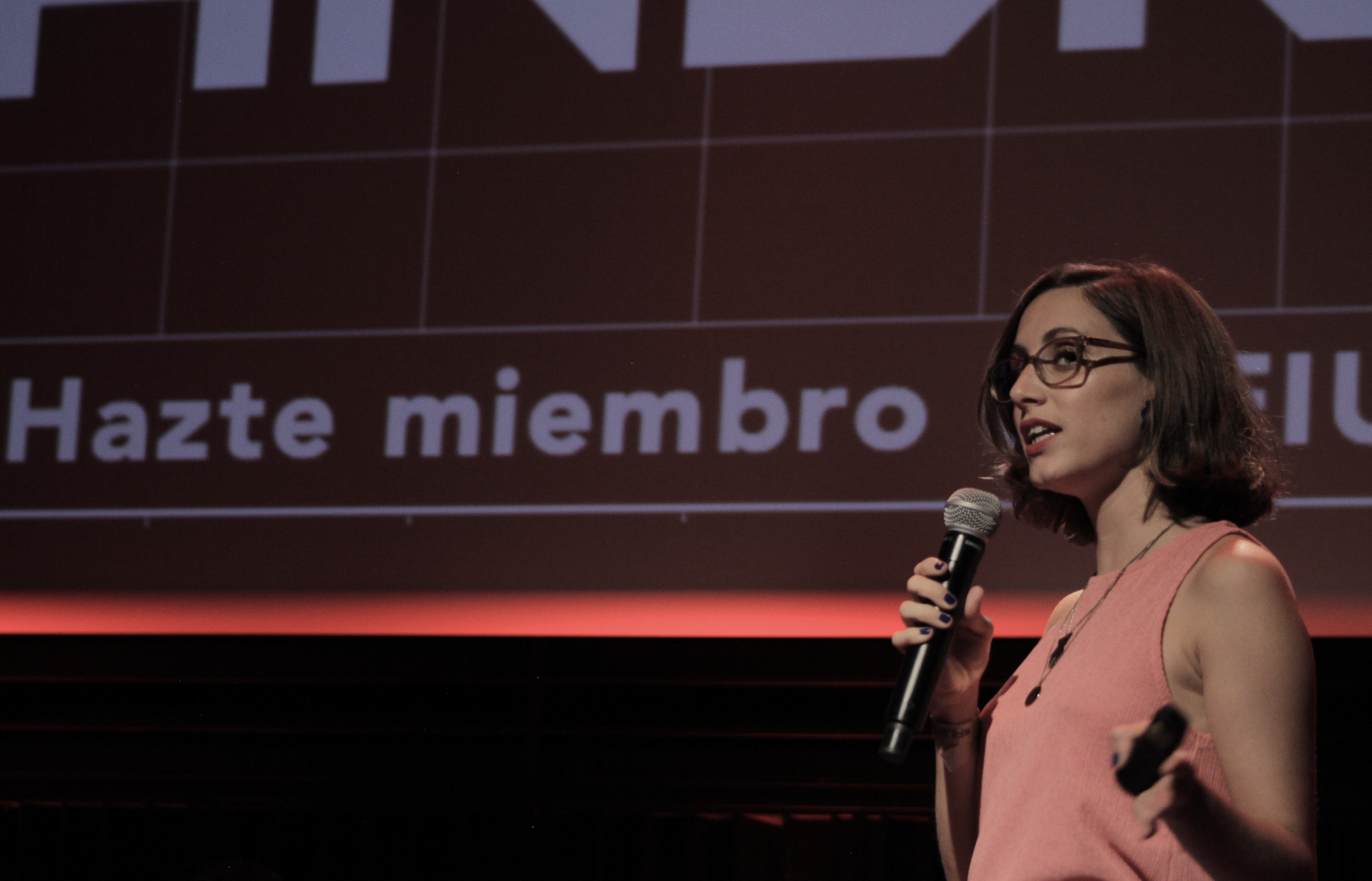
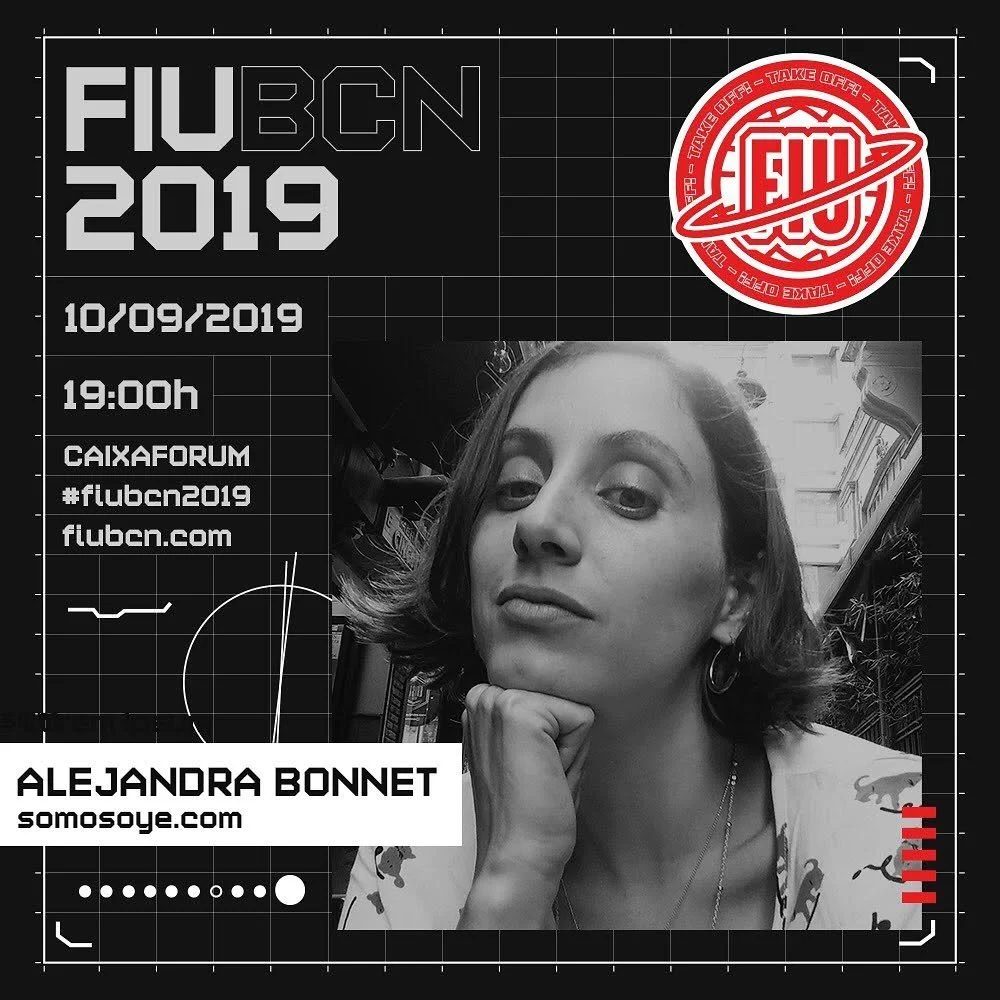
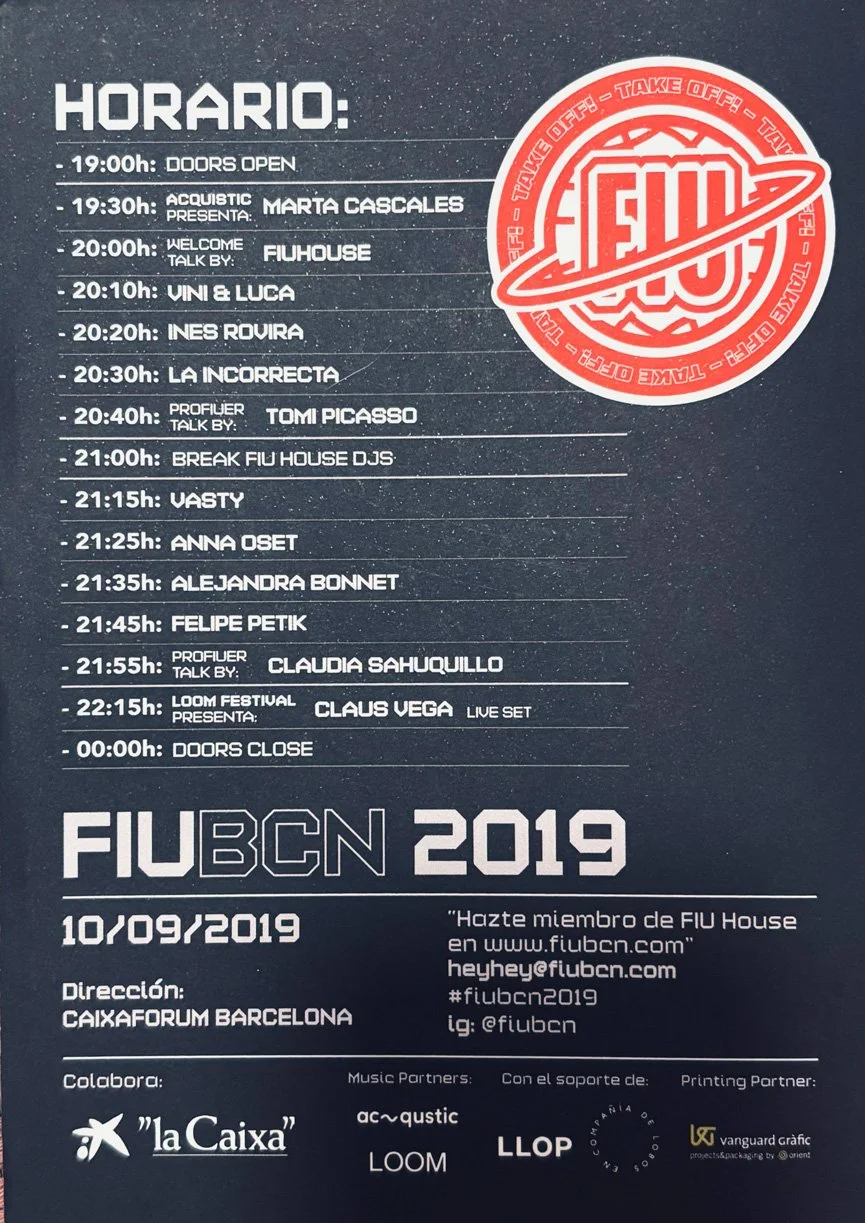
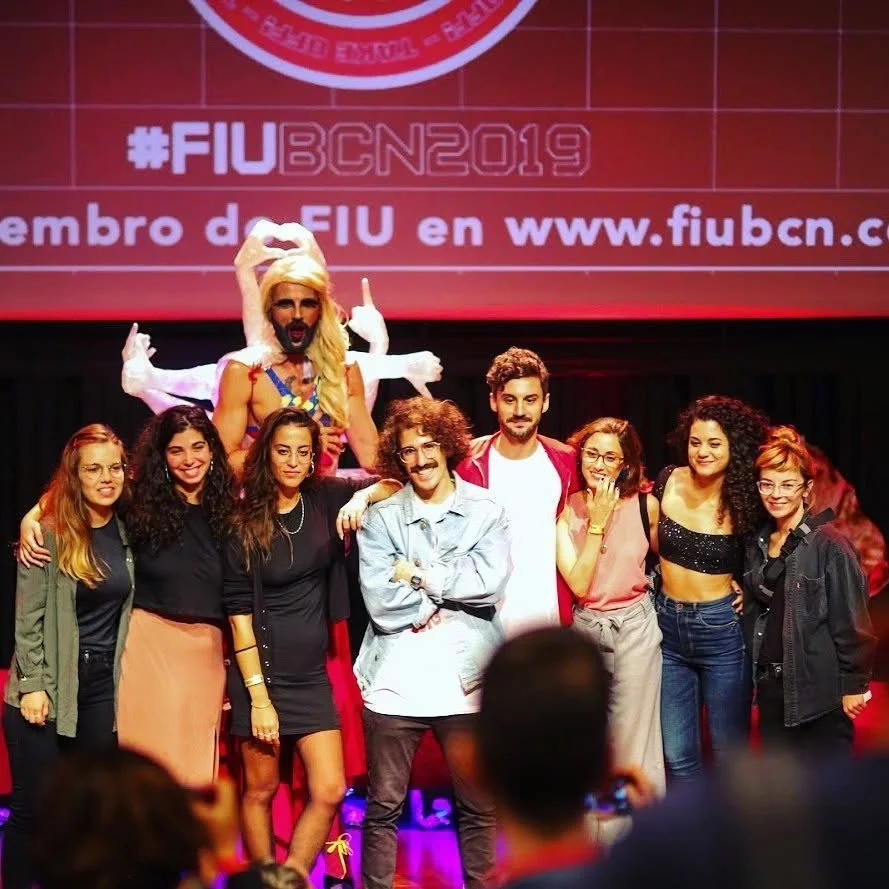
OYE! was chosen to be 1 of 10 creative projects from the FIU Community to be presented at FIU Talks @ Caixaforum Barcelona in front of 300 people!
Results: Our own design methodology
After years of refining with the CoLABs, Camila and I developed Joy Design: a method for creative problem solving in a collective and empathic way. It introduces feminist ethics of care into the already cooperative, creative and iterative power of design thinking.
We put shared joy in the center rather than shared outrage, because outrage tells you who to fight and joy tells you what to build.
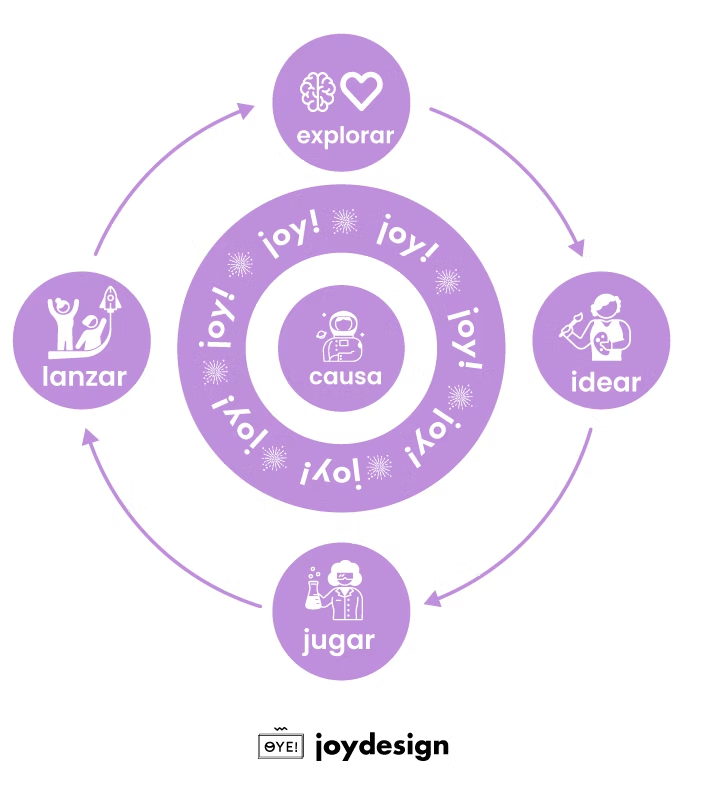
Joy Design, with the cause and shared joy at the centre. Four moves that repeat rather than finish: explore, ideate, play, launch.

The version we handed out at CoLABs. Design thinking rewritten so groups could run it on their own problem, in an afternoon.
What 6 years of OYE! Collective taught me:
1.Service design can move causes that communication campaigns can't.
For years the sector treated resistance to feminism as a messaging problem: explain feminism better, reach more people. My research showed the blocker wasn't comprehension but relationships, and no campaign can redesign someone's relationships. A service can, by giving people a place to practise, doubt and disagree over time. That's the shift service design offers social causes: from persuading an audience to supporting a person through change.
2. Teaching a method empowers more people than teaching a position.
Explaining feminism produced agreement at best. Handing people a way of working produced things: workshops, prototypes, festivals, ideas none of us would have had alone. Joy Design exists because the CoLABs kept proving that people don't need to be convinced, they need to be equipped.
3. A learning service is something you run, not something you launch.
The interventions only worked because someone held the space week after week for six years: moderating the group, hosting the CoLABs, recording the podcast. The design decisions were maybe a third of the work. Operation was the rest, and it's the part that decides whether a community survives.
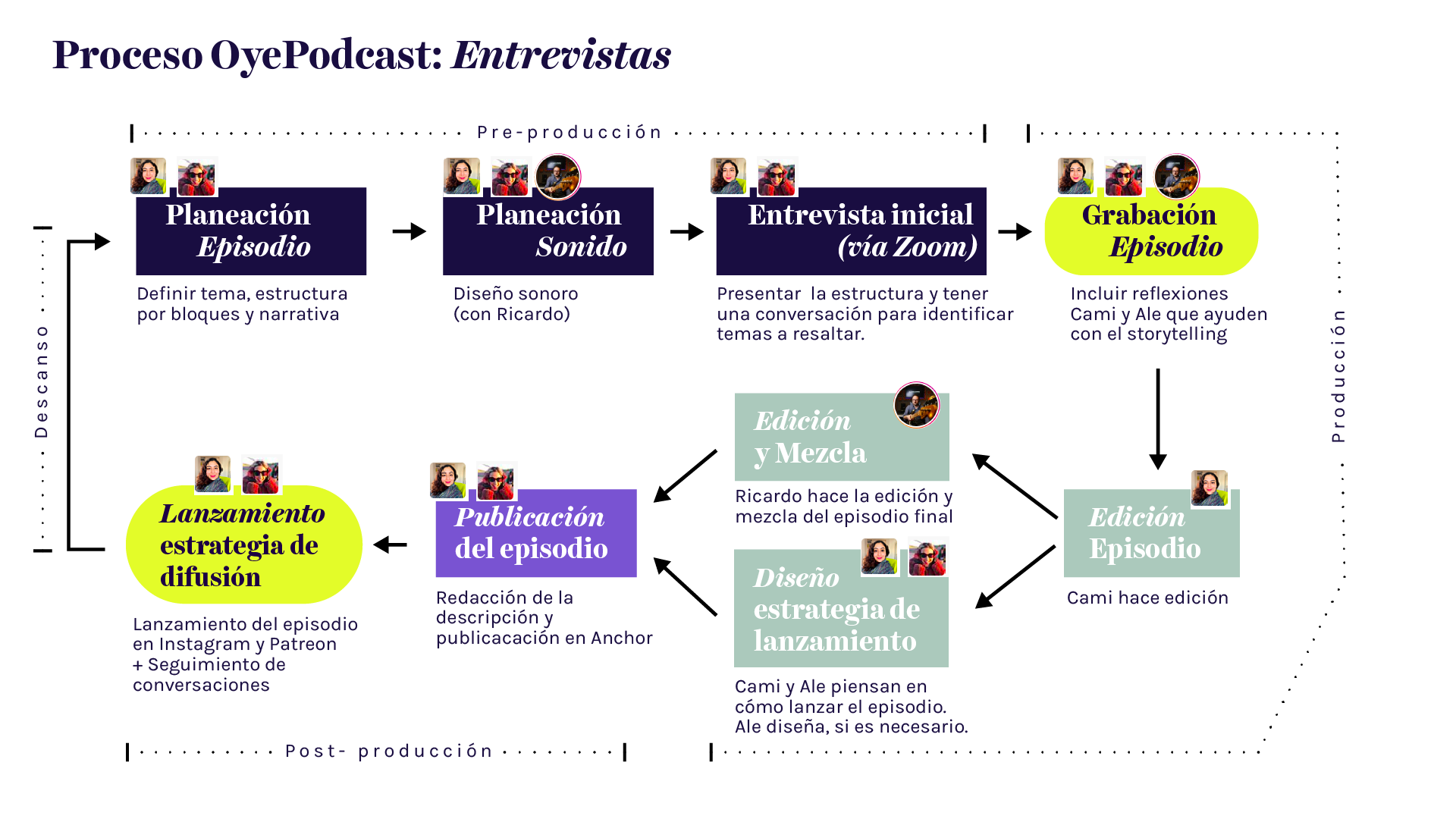
The cyclical workflow I designed for OYE!Podcast, including time to rest. An example of the behind-the-scenes work needed to sustain a community like OYE! Collective.