2020 - 2025
Inspiratorio: designing a flexible learning circuit for Latin Amerian narrative practitioners
A behind-the-scenes look at my 5 years designing, building, and coordinating Inspiratorio, Puentes’ (NGO) narrative training platform.
Skills used
Service Design / User Research / Systems Design / Distributed Team Coordination / Mission-driven work

AI-generated portrait of an Inspiratorio user attending a webinar. Tools: Photoshop + Adobe Firefly.
+2.5K users
Expanded free access to narrative change training for more than 2.5K activists across Latin America.
19 countries, 2 languages, diverse Human Rights causes.
Built shared space for activists from 19 countries and different human rights causes, in Spanish and Portuguese.
100% distributed team
Services delivered by a fully distributed team-of-teams structure across 4 time zones between Spain and Latin America.
Introduction
Narrative change uses art and strategic storytelling to shift attitudes and public perception about injustices, building cultural momentum for social change. Puentes, a Latin American NGO, strengthens civil society's narrative power by building thematic "platforms" that unite activists defending diverse causes to collectively advance specific values-based narratives. These narratives are broad enough to encompass different causes, but joining requires strategic clarity about fit.
Since narrative work was relatively new, Puentes needed more people to understand it so its platforms could attract enough members to drive cultural change. To address this need, I built Inspiratorio: a training platform designed to spark curiosity about narrative work, helping activists explore the approach and consider which collective, values-based narrative to advance.
I led Inspiratorio from 2020 to 2025. As the platform grew, my role evolved from designing and delivering the services myself to team coordination. In a lean, remote team-of-teams, I designed scalable, user-centered service structures and internal communication tools and rituals to enable coherent, autonomous distributed work.
“Inspiratorio empowers Latin American activists by creating the conditions to strengthen their narrative skills to inspire change. As a learning and exploration platform, it provides practical information and spaces for connection so activists can create and share stories that connect, reach broader audiences, and build a shared vision for the future”.
Insipiratorio website
Creating the foundations for the platform
Uncovering user needs and navigating cultural complexity
During Discovery, we teamed with Háptica (Colombia) to gather user insights. We found out that Puentes’ users (activists, human rights lawyers, journalists, researchers, creators, and artists) were excited about narrative work but found it hard to start and were unclear about how Puentes could help.
From Puentes’ leadership, we understood that spaces for Latin American Human Rights changemakers needed to meet certain expectations:
Users from 19+ countries and varied Human Rights causes needed assurance that their ideas, identities, and cultures would be respected. We therefore had to address power dynamics and make reasonable accommodations to foster inclusion.
Participants were sensitive to experts prescribing solutions, so we had to earn trust by facilitating conversation and exploration rather than claiming expertise.
Additionally, the past 5-10 years have been tough for Human Rights activists, especially in Latin America and the Global Majority. Anxiety, frustration, and stagnation arise as old strategies fail; fear and overanalysis block innovation. For the platform to be attractive to users, Inspiratorio had to do its best to counter this, fostering a sense of solidarity with inspiration and creativity.
Translating insights into experience-shaping principles
To guarantee the platform would always be user-centered, I defined 5 design principles that would shape every aspect of Inspiratorio, from branding and online marketing to how the services were delivered. I applied Fetell-Lee’s Aesthetics of Joy to Inspiratorio’s Design Principles, focusing on Energy (lift mood, enliven spaces), Play (spark creativity), and Celebration (amplify shared joy). Activism is already emotionally demanding, and what better way to show the power of narrative work than by using the symbolic to shift users out of their default critical mode and into a kinder, more collaborative, and creative state of mind, without them even being aware of it.
Every touchpoint would be intentionally designed to reinforce them, so users would come in primed to expect the kind of treatment that allows for narrative learning to flourish.
Visual describing Inspiratorio’s design principles: the most important goals that Inspiratorio should deliver for users.
Example of brand application on digital touchpoints (designed by Camino, Inspiratorio’s comms agency.)
By leveraging Fetell-Lee’s Aesthetics of Joy, I could shift users from their default critical mode into a kinder, more collaborative, creative state.
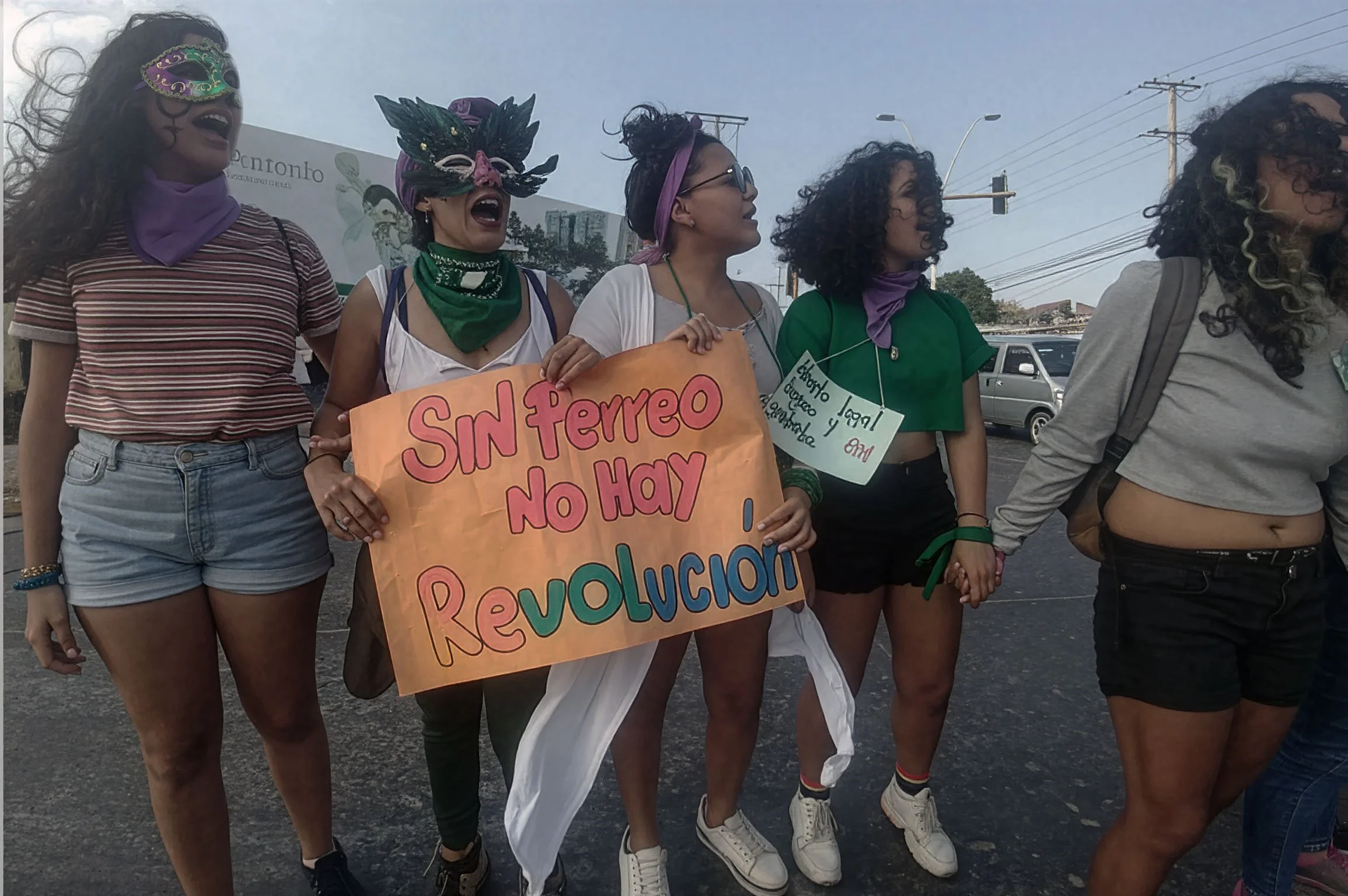


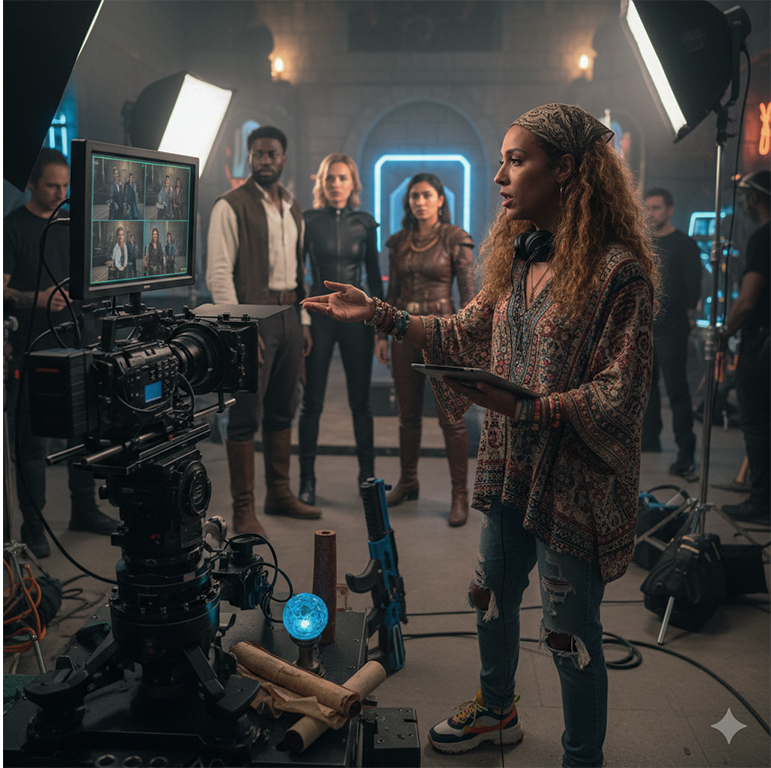
*Note: These are not real people. They are AI-generated protraits representing users of Inspiratorio. Gen-AI tools used: ChatGPT, Nano Bana, Adobe Firefly + Photoshop.
Designing for diverse learning needs
Creating user personas through research-driven segmentation
Guided by user research, I segmented users based on their primary learning need: 1) The Self-paced learner, who valued offline content; 2) The Active Learner, who valued live learning with experts; and 3) The Experimenter, who valued time, money, and support to develop their own narrative projects. Based on this segmentation, I created user stories that would help the team make user-centered decisions.
Visual of Inspiratorio’s 3 types of user stories.
Building a flexible, non-linear service ecosystem
Inspiratorio's learning services were designed to be non-linear because they were not meant for full capacity installation, neither for organizations nor individuals. Instead, they were meant to spark curiosity while covering a basic understanding of every topic. In this way, users could access whatever training they needed when they needed it. For example, some started with Experimenter offerings (grant programs), then moved to Self-paced Learner resources (research insights, blog, inspiration community) to fill gaps. Others began with Active Learner offerings (webinars, Community of Practice) and gradually built confidence to experiment.
Visual of Inspiratorio’s services according to users’ needs.
Blueprinting Service Delivery
Designing hospitality-centered workflows to build trust and enable inclusive learning
Based on Inspiratorio’s Design Principles, I designed service blueprints for each of the services that made up the ecosystem. The idea was to align Puentes’ team around how each service would actually run. Each blueprint would map users’ actions and emotional needs, and explain who should do what and when to foster inclusive, cooperative learning and experimentation that was expected.
For example, because trust had to be earned by encouraging conversation and exploration rather than asserting authority, I designed the role of the Inspiratorio’s user-facing team (hosts) according to Casper ter Kuile’s idea of radical hospitality, where both the hosts and participants show vulnerability to each other, creating a foundation for genuine connection. It's not just about providing comfort or being a good entertainer.
Visual of the blueprint for the webinar service designed for the Active Learner.
Operational note: Puentes needed Inspiratorio to be delivering services at the same time that I was designing them. To meet this need, I designed an adaptable service blueprint that could adapt as new user types and services were added. It was based on a modular system where there were always 3 service stages: pre-service, during the service, and after the service.
Coordinating the Team of Teams
Creating project systems that balanced autonomy with alignment across 4 time zones
During the time I was at Puentes, it operated as a fully remote team of teams across Spain and Latin America, spanning 4 time zones. Since there was limited overlap with key Latin American teammates, it was important to manage the team’s projects, balancing strategic alignment and individual autonomy with minimal need for oversight. Furthermore, the work culture was low-authority, but needed structure to scale.
I softly introduced project context documents as a single source of truth, capturing goals, constraints, decisions, roles, and success metrics. This allowed teammates to move autonomously while staying aligned, even with minimal real-time overlap. I also created messaging templates to reduce cognitive load, so teammates could focus their creative energy on what actually required original thinking. I prioritized and sequenced projects based on team capacity, enabling predictable delivery without overloading the team. Finally, I ran weekly alignment and prioritization meetings that incorporated capacity and well-being signals to maintain sustainable delivery.
As the team-of-teams structure grew and new external providers joined, I used design principles, service blueprints, and personas to accelerate onboarding and prevent strategic misalignment.
Visual of Puentes’ operational team-of-teams structure: multiple autonomous teams working toward shared outcomes, aligned through common context rather than centralized control.
Visual of team roles and how they delivered each part of the service for the Self‑paced Learner.
Key takeaways
Online learning happens around life, not the other way around.
Asynchronous access should be the default, and when learning is live, it must offer clear added value; hosts, reminders, fast access to recordings, even non-linear learning paths, can help users re-enter when life interrupts.
A user-centered brand creates stability while products evolve.
When navigating uncertainty, investing in designing how a platform feels for users builds trust and continuity while allowing for flexibility when features and services are still being designed.
Speed builds donor/funding legitimacy; evidence builds user value and team resilience.
When resources are limited, optimizing for one often sacrifices the other. Proofs of concept should balance both to deliver impact, create user value, and sustain the team.
In low-authority cultures, introducing structure requires change management.
While the systems I designed for coordination were intended to increase clarity and autonomy, I learned that tools alone are not enough: they require explicit change management and sustained support from leadership. If I were to do this again, I would invest earlier in aligning expectations, explaining the “why,” and pacing adoption more intentionally.